
Top Signs You Need Garage Door Service – Don’t Ignore These
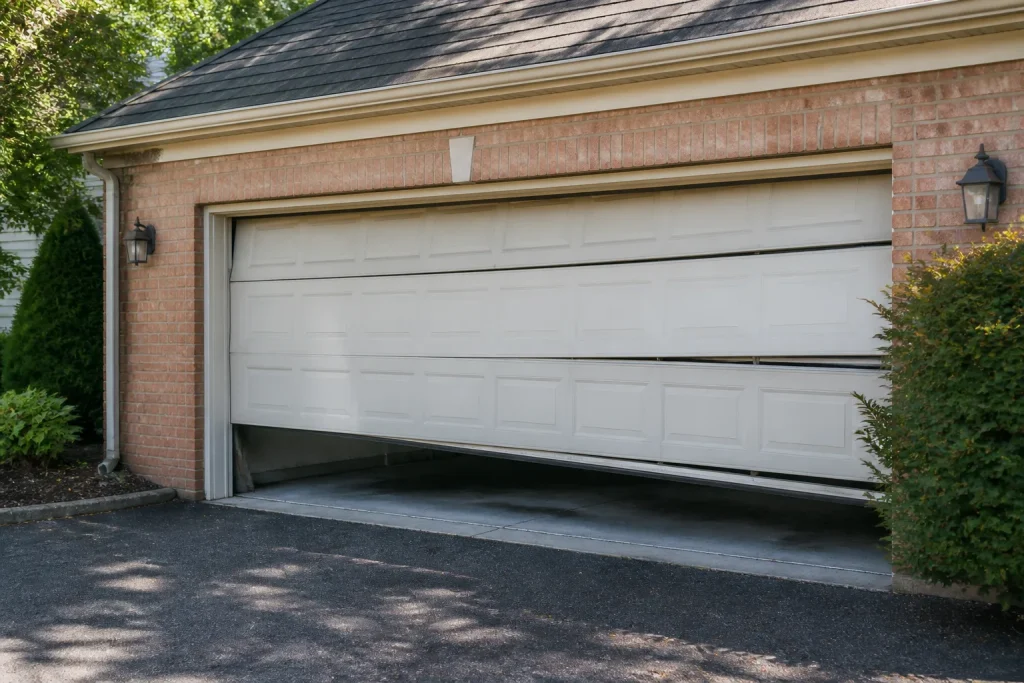
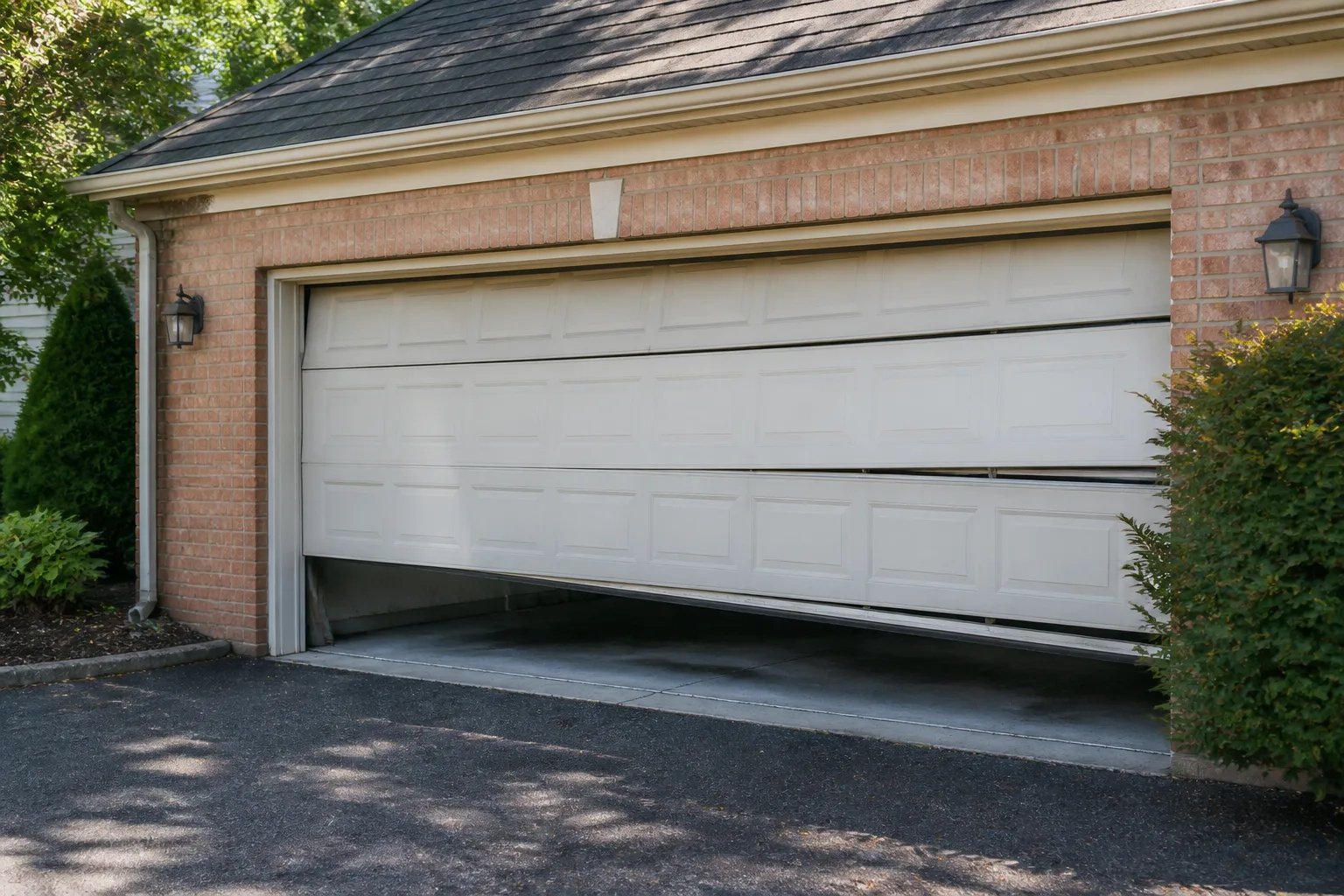
A garage door that takes two seconds longer to open than it did six months ago isn’t a quirk. It’s usually the opener’s motor compensating for added resistance, often from a dry or misaligned track, and that extra load shortens the motor’s life with every cycle. The warning signs of garage door failure are mechanical, not mysterious. They show up as specific sounds, movements, and timing changes, and each one points to a particular component nearing the end of its life. Here are the signals worth taking seriously. And if you’d rather not climb a ladder to investigate, call us at (888) 569-3530 and we’ll take a look.
Your Door Is Slower Than It Used to Be
This is the most reliable early warning sign, and almost nobody tracks it. The speed-change test is simple. Time your door with a stopwatch from fully closed to fully open. Write down the number. Do it again in a month. A healthy door runs at a consistent pace; when that pace creeps upward by a second or two, the opener’s motor is working harder than it should.
What causes the drag? A few common culprits:
- A track that’s been knocked slightly out of alignment, so the rollers scrape instead of roll
- Rollers that have worn flat or seized, adding friction along the whole travel path
- Dry or gummed-up hinges and pivots that no longer move freely
- A torsion spring that’s lost some tension, so the motor carries weight the spring used to handle
In our experience, timing the door is the cheapest diagnostic test a homeowner can run. Many of the LiftMaster and Chamberlain openers we work on have safety features that eventually refuse to lift a door with too much resistance, which means that slow door will one day just stop. Catching it early turns a strained motor into a quick adjustment. Ignoring it can turn a tune-up into an opener replacement. When we measure a door in Brick Township, the slow ones almost always trace back to a track or roller problem rather than the motor itself.
Listen for the Difference Between a Click and a Clunk
Garage doors make noise. The question is which noise you’re hearing, because different sounds mean different things and come with different urgency levels.
A rhythmic click or tick during travel usually comes from the rollers passing over a track joist or a loose section joint. It repeats on every cycle and tends to get louder over weeks. This one is often a tightening job or a roller issue. It’s not an emergency, but it’s a sign something’s working loose, and loose hardware wears fast.
A single clunk at the end of travel is more serious. That hard stop means the door is hitting the floor or the header with force it shouldn’t have, often because the travel limits are set wrong or a spring has lost tension. That impact travels into the opener’s gear assembly every time the door closes.
A loud bang from the spring area, followed by the door refusing to move is the sound of a torsion spring snapping. Stop there. Don’t try to force the door open. A broken spring is a genuine safety issue, and the components are under enough tension to cause serious injury. We handle garage door spring repair as a core service for exactly this reason, and our technicians have up to 12 years of experience reading these failure modes.
You Can See or Feel Cable Damage
Cables run alongside the springs and help lift the door. They’re one of the most overlooked parts of the system until they fail. Learning what to look for takes two minutes with a flashlight.
A frayed cable shows broken outer strands sticking out of the wound wire, like a rope that’s starting to unwind. Fraying means the cable is losing strength and could snap under load. This is a replace-now situation, not a watch-and-wait one.
A kinked cable has a sharp bend or a spot where the wire has crushed inward but the strands are still intact. It’s a warning that the cable jumped its drum or got caught, and it will fail if you keep running the door. If a cable is kinked or visibly damaged, don’t operate the door.
Both problems belong to a technician. Cables carry the door’s weight under tension, and they can whip when they let go. In Brick Township, the local climate speeds up the wear on these parts, which is why we look at the cables and springs together on every service call. A quick inspection from the ground, with the door closed, is something any homeowner can safely do.
The Door Opens Fine but Reverses on the Way Down
This one frustrates people because the door works, sort of. It goes up without complaint, then comes down partway and heads back up. The instinct is to assume the safety sensors are broken and need replacing. That’s often not the case.
More often, the issue is sensor alignment or the opener’s force calibration. The sensors are the two small eyes mounted near the floor on each side of the door. If one gets bumped, or if sunlight hits a lens, or if the brackets drift slightly out of line, the opener reads an obstruction and reverses. Before anyone replaces anything, check two things:
- Are both sensor lights on and steady? A blinking light points to alignment or a blocked beam.
- Is anything in the door’s path, including cobwebs or debris, catching the beam?
If the sensors look aligned and the lights are steady, the opener’s force setting is the next suspect. That’s a calibration issue, not a hardware failure. On Genie and Chamberlain units we service, a quick recalibration often fixes a door that reverses for no obvious reason. The bottom line: a reversing door is usually an adjustment, not a replacement. Our garage door opener repair service starts with a diagnosis, not a sales pitch.
Rust and Corrosion on the Springs
Springs are steel under constant tension, and moisture is their enemy. Surface rust shows up as a fine brown film on the coils. It’s worth catching, because rust works its way into the coil and weakens the metal until the spring fails.
Where you see the rust matters. Light surface rust on the outer coils is common and can often be slowed with regular maintenance. Rust concentrated at the coils’ ends, deep pitting, or rust combined with a door that feels heavier than it used to is a stronger signal that the spring is close to the end of its life.
Every spring eventually breaks, and the warning signs give you a chance to replace it on a scheduled visit instead of an emergency one. In our experience around Brick Township, doors that sit on humid, damp garages see spring corrosion sooner than those in drier spots, so an annual visual check from the ground is a smart habit. When you spot rust, don’t reach for a can of spray lubricant and call it done. Have it looked at properly. A trained technician can tell the difference between cosmetic surface rust and a spring that’s about to let go, and we never recommend a replacement when a repair keeps the door running safely.
When to Call a Pro
Some of these signs are DIY-friendly to spot, but few are DIY-friendly to fix. Springs and cables are under extreme tension and cause real injuries when they let go. If you see a frayed or kinked cable, hear the bang of a snapped spring, or the door has stopped moving altogether, that’s the moment to call. We’re equipped to handle garage door repair across all the major brands, from Clopay panels to Amarr doors, and we treat the whole system, not just the part that’s loudest.
If the door is stuck open and you’re worried about security, or the door won’t budge and you can’t get a car out, emergency help matters. That’s why emergency service is part of what we do, not an upsell. If the issue is slow-moving rather than urgent, a free estimate and a written quote is the way to start. We quote the price and agree on it before any work begins, and the written estimate sets the final number.
Related services in Brick Township: if the problem is the door itself, openers, or springs, our team covers Garage Door Repair Brick. If you’re at the end of your door’s life and weighing a replacement, a free measure and a written price is the sensible first step rather than a rushed decision.
The Bottom Line
Garage door trouble announces itself through timing, sound, and visible wear. Track your door’s open time with a stopwatch, listen for the difference between a rhythmic click and a hard clunk, check the cables for fraying and kinks, and look at the springs for rust. Those four checks catch most failures before they become emergencies. A reversing door is usually an alignment or calibration fix, not a new opener. And a spring that’s rusted, sagging, or heavier than it used to be is a job for a technician, not a weekend project. Our technicians have up to 12 years of experience on these systems, so if you’d rather have a pro look at it, we’re glad to help.
If you’re in Brick Township and need help, Garage Door Repair Brick offers free estimates. Call (888) 569-3530. We answer 24/7, with fast dispatch from 7am to 7pm, Sunday through Friday.
Frequently Asked Questions
Time it. If it opens a second or two slower than it did a few months ago, the motor is straining and it’s worth a look. Other signs include rhythmic clicking during travel, a hard clunk at the end of travel, frayed or kinked cables, surface rust on springs, or a door that opens fine but reverses on the way down. Call (888) 569-3530 for a free estimate and we’ll sort out which one it is.
Treat it as urgent. A frayed cable has lost strength and can snap under load, so stop running the door and get it inspected. A kinked cable is a warning sign that will also fail if you keep operating the door. If you’re not sure which you have, call (888) 569-3530 for a free estimate before you cycle the door again.
It’s almost always a sensor alignment or force calibration issue, not a broken sensor that needs replacing. Check that the sensor lights are on and steady and that nothing is blocking the beam, then let a technician recalibrate the opener’s force setting if needed. Call (888) 569-3530 for a free estimate so we can pinpoint the cause.
No. A broken spring is a repair, not a reason for a new door. Springs are a wear part, and replacing them restores the door. We keep spring repair as a dedicated service because it’s the most mechanically demanding part of the system, and we won’t push a replacement you don’t need. Call (888) 569-3530 for a free estimate.
Do a quick visual check for rust, frayed cables, and alignment about once a year, and time the door’s travel every few months. Spring failure is a safety issue, and a technician can catch a weakening spring before it breaks. Call (888) 569-3530 for a free estimate on any concerns.
Written by the team at Garage Door Repair Brick.
Need Garage Door Help?
Call Garage Door Repair Brick - the local pro we connect you with is licensed and insured, here with fast help in Brick.
(888) 569-3530