
Last updated November 21, 2026
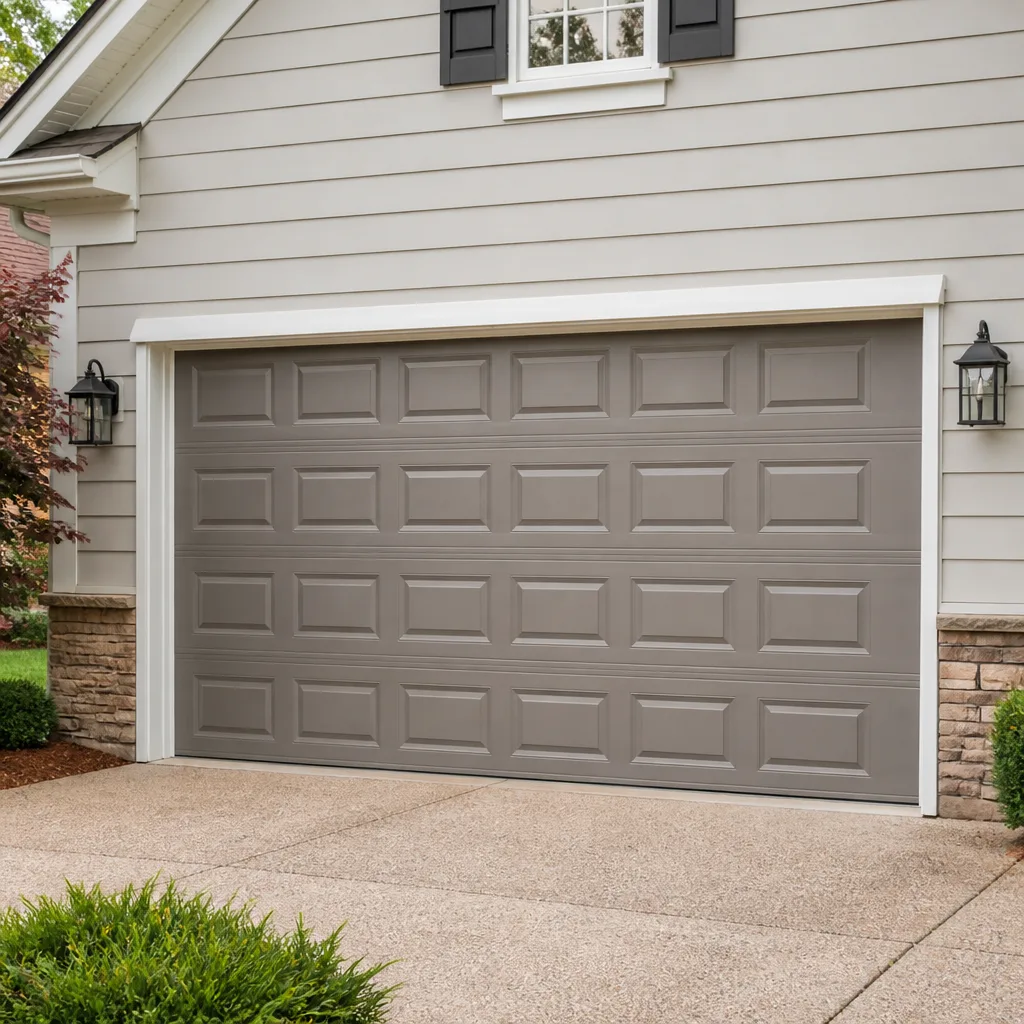 Raised-panel steel
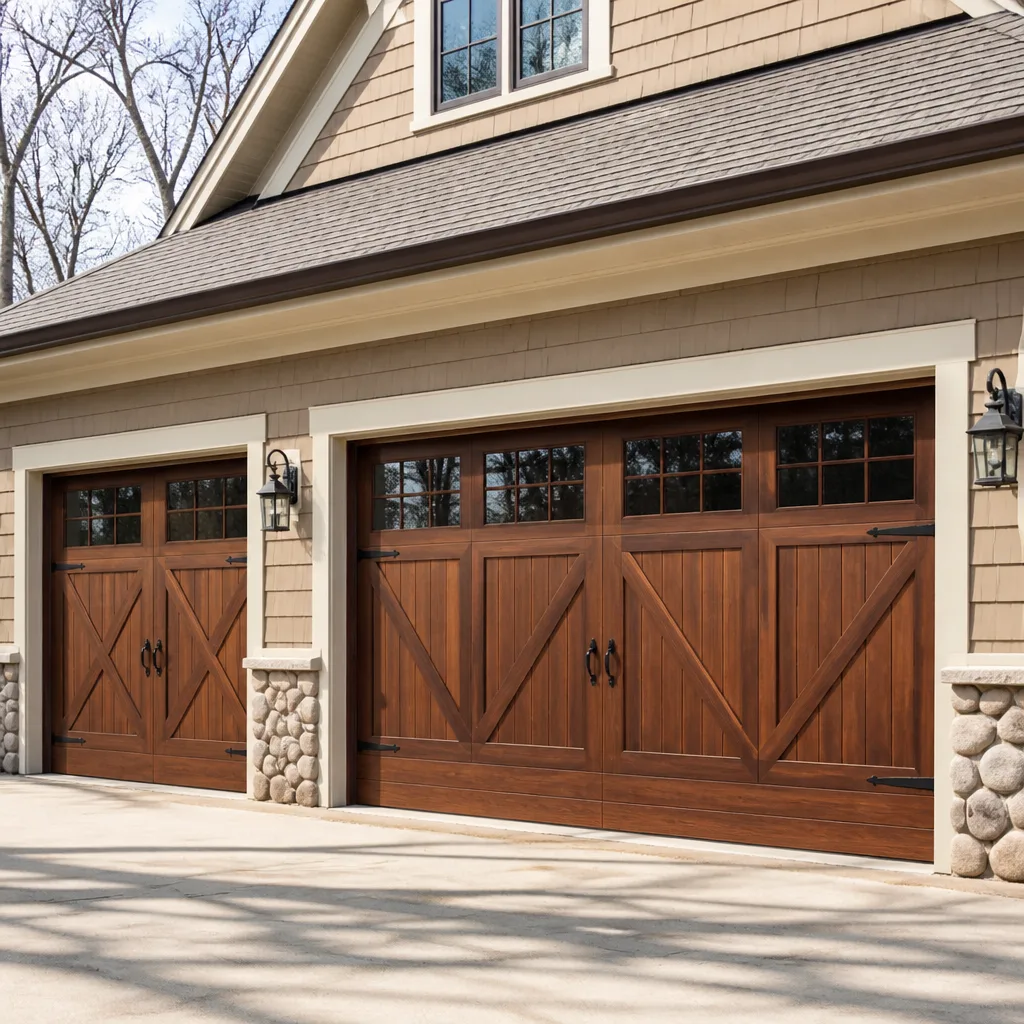 Carriage house
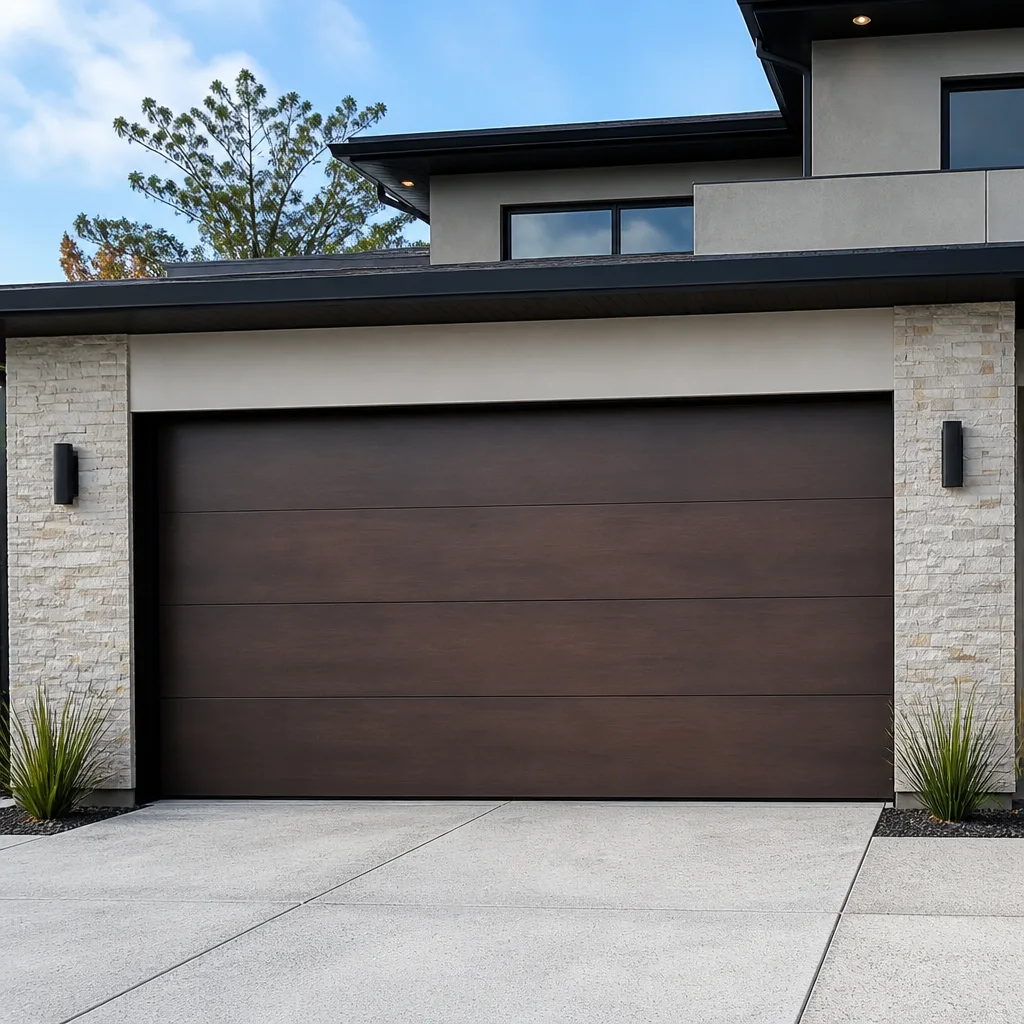 Modern flush
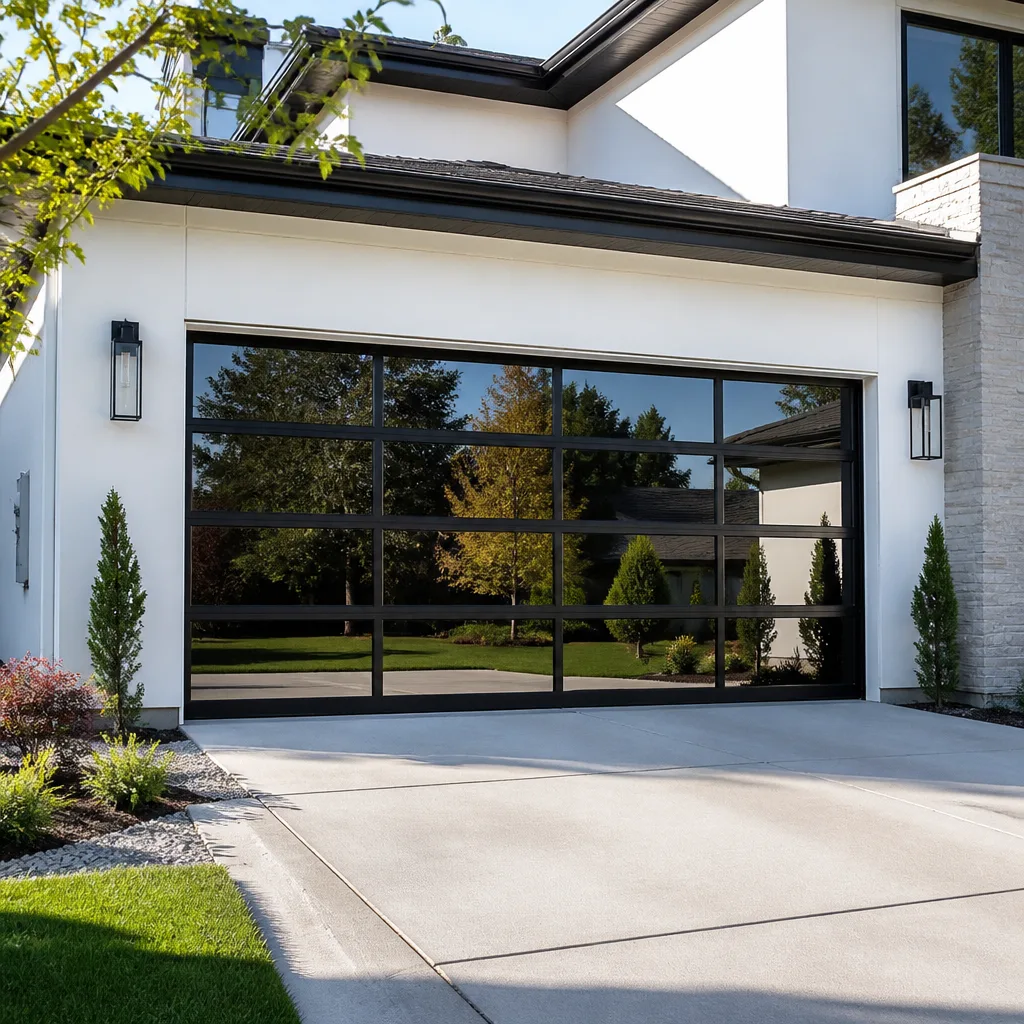 Full-view glass
 LiftMaster openers
 Chamberlain openers
Full 25-point door and opener safety check with every visit - springs, cables, rollers, tracks, and your LiftMaster or Chamberlain opener included
You get a price before we start. It does not change when the pro arrives.
Get your free estimateGarage Door Repair Troubleshooting in Brick Township: Common Problems and How to Fix Them
A garage door that reverses before it reaches the floor is not a sensor problem as often as homeowners think. When we run calls in Brick Township, we find that a good share of those reversing doors are fighting a tension imbalance that fools the opener’s resistance detector into thinking it hit an obstruction. The sensors are fine. The springs are not. That single insight saves a lot of guesswork, and it’s the heart of this guide: most garage door failures fall into four mechanical categories, and knowing which one you’re facing tells you what to check, what to leave alone, and when to call.
You’ll learn how to map sounds to parts, run the manual disconnect test safely, use the two-finger balance test, and separate the fixes you can handle from the ones that belong to a technician.
Quick Answer
Most garage door problems in Brick Township trace back to four causes: spring tension loss, track misalignment, opener signal failure, or hardware wear on rollers and hinges. You can diagnose the category yourself with two safe tests – the manual disconnect and the two-finger balance check – but anything involving torsion springs under tension needs a trained technician, because those springs store enough force to cause serious injury.
Grinding usually means worn rollers. Squealing points to dry hinges or a failing bearing. A clunk at the start or end of travel often signals a broken torsion spring coil. Once you know which category you’re in, the path to a fix gets fairly short.
Styles & brands we work with
- Raised-panel steel
- Carriage house
- Modern flush
- Full-view glass
- LiftMaster openers
- Chamberlain openers
Table of Contents
- The Symptom-to-Cause Matrix: Match the Sound to the Part
- The Manual Disconnect Test: Is It the Opener or the Door?
- The Two-Finger Balance Test: 30 Seconds to Check Spring Tension
- Why Track Misalignment in Brick Township Is Usually Seasonal, Not Impact
- Opener Signal and Remote Problems by Brand
- Rollers, Hinges, and Cable Wear: What Ages First
- What’s DIY-Safe and What Isn’t (Torsion Springs Are Not)
- Why Doors Struggle More in Brick Township Winters
The Symptom-to-Cause Matrix: Match the Sound to the Part
Listen before you touch anything. The specific sound your door makes narrows the problem to one or two components faster than any visual inspection. Here’s how the common noises shake out:
- Grinding: Usually worn nylon or steel rollers that have flat-spotted, or a roller stem that’s seized in its hinge. Grinding that gets worse as the door rises often points to a bent track the roller is scraping.
- Squealing: Dry hinges, a dry torsion bearing plate, or a failing opener bearing. If it squeals at one point in travel only, it’s mechanical. If it squeals constantly, check the opener motor.
- Clunking at start or end of travel: Often a broken torsion spring coil – the spring looks intact but has lost its load. A single hard clunk can also be a loose hinge or a roller that’s jumped the track.
- Rattling: Loose hinge bolts, a slack chain on a chain-drive opener, or a panel bolt that’s backed out.
- Pulsing or jerky travel: Track out of alignment, a worn roller, or the opener’s force setting drifted too low.
On the north end of Brick Township, doors that face the open marsh wind off Barnegat Bay tend to lose hinge lubrication faster, so squealing shows up sooner there than on more sheltered streets. It’s not damage; it’s just hardware that needs attention.
- Stand inside the garage with the door closed. Don’t operate it yet.
- Look at the springs above the door – one spring means torsion, two side springs means extension.
- Check the springs for gaps: a broken torsion spring will show a visible gap of an inch or more, even if the door still moves.
- Now operate the door and listen for the sound. Match it to the list above.
That’s the whole diagnostic. If you’re getting a grinding or squealing sound that gets worse as the door travels, the fix is likely a hardware cleanup rather than a full door problem, and often a same-visit repair when you call for garage door repair.
The Manual Disconnect Test: Is It the Opener or the Door?
The manual disconnect test is the single most useful check you can run at home. It isolates whether the problem lives in the door (springs, tracks, hardware) or in the opener (motor, logic board, signal). Once you know which side the fault is on, you stop chasing the wrong component.
Every opener has a red emergency release cord hanging from the carriage. That’s what you’ll use. Do this with the door fully closed and the opener powered off at the wall if possible.
- Stand clear of the door path and pull the red release cord down and toward the opener. You should hear a click as the carriage disconnects from the drive belt or chain.
- Lift the door halfway by hand, slowly. A properly balanced door will feel light – roughly the weight of a shopping bag – and will hold its position when you let go.
- If the door is impossibly heavy, won’t stay up on its own, or drops fast, the problem is in the door: springs, cables, or balance. Stop here. Don’t force it.
- If the door moves freely and balances, but the opener won’t run or behaves oddly when you reconnect, the fault is on the opener side – motor, capacitor, safety sensors, or logic.
- Reconnect by lifting the door until the carriage snaps back into the drive, then run the opener once to confirm travel.
This test turns a confusing failure into a clean yes-or-no answer. When the door is at fault, we treat it as a mechanical repair. When the opener is at fault, it’s a separate diagnosis, which is why we handle garage door opener repair as its own discipline.
The Two-Finger Balance Test: 30 Seconds to Check Spring Tension
You don’t need tools to find out whether your springs are still doing their job. The two-finger balance test tells you in half a minute:
- Disconnect the opener using the red release cord so the door is free of the drive.
- Lift the door by hand until it’s about waist high – roughly three feet off the floor.
- Let go. A balanced door holds roughly in place.
- Now lift it to halfway. Same test. A balanced door moves with minimal effort and stops where you leave it.
- Finally, lower it to about knee height and let go. It should drift down slowly or hold.
If the door crashes down from any of those heights, or if it takes serious muscle to lift from closed, the springs have lost tension. That’s a spring problem, not an opener problem – even though the opener will seem weak or slow, it’s actually fighting a door the springs are no longer lifting.
One more note: springs don’t quietly fade. They either hold their wound tension or they break, and the “fade” people feel is often a snapped coil that left the door operable on only one spring. If you see a visible gap in a torsion spring, or a coil that’s unspooled on an extension spring, the door should stay closed until a technician deals with it. That’s exactly the situation our garage door spring repair service exists for, and it’s a distinct skill from general repair. Spring work is the highest-risk job on a residential door, and it’s where a generalist handyman has no business being.
Why Track Misalignment in Brick Township Is Usually Seasonal, Not Impact
Most homeowners assume a misaligned track means something hit the door. In Brick Township, that’s rarely the cause. The far more common culprit is seasonal movement of the wood framing the track is bolted to. Our climate swings from humid summer afternoons in the high 80s to dry winter air that pulls the framing in, and over a few seasons that expansion and contraction loosens the lag bolts holding the track to the wall and the ceiling.
The result is a track that’s slightly out of plumb or has lost its consistent gap from the door. You’ll notice:
- A roller that pops out of the track on one side, usually a few feet up
- Grinding at one spot in the door’s travel
- The door binding against one jamb before it fully closes
- A gap between the door and the floor on one corner even with the door fully down
Bolts retighten. Gaps close. On older Brick Township homes with original framing, the adjustment is usually a matter of pulling the track back to vertical and resetting the roller. The springs stay untouched.
What makes this tricky is that a track that’s out by a quarter inch will drag the opener’s resistance reading up enough to trigger a reverse. That’s why the balance test and the disconnect test both matter: if the door passes both but still reverses, look at the track. It’s also why we like to see the door in person rather than guess. A free estimate in Brick Township gets a technician under the ceiling where the lag bolts actually are.
Wood-framed doors from Raynor and Amarr, common in this area, tend to show this pattern more than steel-framed doors. It’s not a brand problem; it’s a framing problem.
Opener Signal and Remote Problems by Brand
When the door won’t respond to a remote or wall button, the fault is usually the opener’s logic or signal, not the door. Different brands fail in different ways, and knowing which platform you have narrows diagnosis fast.
- LiftMaster and Chamberlain: Both use the myQ ecosystem, and both share remote and wall control logic in many models. When the wall button works but the remote doesn’t, the receiver or the rolling-code handshake is usually the culprit. When both fail, look at the logic board or the safety sensor circuit.
- Genie: Often the wall console or the logic board. Genie’s safety sensors have their own diagnostic light pattern worth checking against the manual.
- Craftsman: Many Craftsman units are older models with separable receiver modules. A dead remote button often traces to a receiver that’s lost its pairing, not a motor.
A few general rules apply across all brands:
- Check the safety sensors first – a misaligned or dusty sensor stops the door dead and mimics a signal failure.
- Test the wall button. If it works and the remote doesn’t, the problem is the remote or receiver.
- Test the remote with a fresh battery.
- Look at the opener’s diagnostic LED, usually near the antenna wire – a flashing pattern usually tells you what the opener thinks is wrong.
- If both wall button and remote fail, check the circuit breaker and the opener’s own fuse or logic board.
We work with both dominant smart-home platforms – LiftMaster and Chamberlain – alongside Genie, Craftsman, and the rest of the eight brands we handle, so signal diagnosis doesn’t require us to guess at the platform. If the problem is beyond a sensor reset or a remote pair, we can usually tell you what the opener needs on the same visit.
Rollers, Hinges, and Cable Wear: What Ages First
Every garage door has a wear order. Knowing it helps you decide what to fix and what to leave alone. Across the doors we see in Brick Township, the order is fairly consistent:
- Rollers (first to go): Nylon rollers flatten and steel rollers rust at the stem. Nylon rollers typically last longer; steel rollers, especially in homes near the water whose tracks face prevailing damp winds, start to squeal sooner. Replace them in sets, not one at a time.
- Hinges (second): Hinge plates work-harden and crack, usually at the radius bend where the door pivots. Hinge failures are quiet until they’re sudden.
- Cables (third): Lift cables fray at the drum. The strands go first, then the whole cable. A frayed cable is a stop-and-call situation, because if a cable lets go, the door can cock and hit the floor.
- Bottom seal (steady wear): The rubber gasket at the floor flattens and hardens, letting air and water in. Cheap to replace, easy to overlook.
- Springs (long interval, then sudden): Torsion springs carry a rated cycle life; when they hit it, they break. Nothing to spray, nothing to slow down. The fix is replacement.
Hardware work is where a lot of doors get “fixed” badly. Replacement panels that are the wrong gauge, mismatched rollers that wear differently from the rest, hinges pulled from a big-box bin that aren’t rated for the load – those create new problems. We work to the components of the system in front of us, not a generic substitute, which is why the Wayne Dalton, Amarr, Craftsman, and Raynor doors we service get their original fit restored rather than a workaround. When the door is damaged beyond a hardware fix, we’re honest about it and can quote a replacement rather than patching the un-patchable. See Garage Door Repair Brick for the full service picture if you’re at that decision point.
What’s DIY-Safe and What Isn’t (Torsion Springs Are Not)
Not every garage door problem requires a technician. Some do, and the difference needs to be clear before you pick up a wrench. Here’s how we draw the line:
Safe for a homeowner:
- Testing sensors and cleaning the lenses
- Pairing a remote to the opener or replacing its battery
- Tightening visible loose hinge bolts with a hand tool
- Replacing a bottom seal or a weatherstrip
- Running the manual disconnect and balance tests
- Lubricating hinges and roller stems with a garage-door-rated spray
Not safe for a homeowner:
- Anything involving torsion springs, which are under tension even when the door is closed. A torsion spring stores enough force to cause serious injury in a fraction of a second.
- Replacing extension springs – they also store load, and the safety cable is the only thing keeping a broken spring from launching.
- Adjusting or replacing lift cables – a slipped cable can drop the door suddenly.
- Replacing the top bracket or the center bearing plate – both are tied to the spring system.
- Resetting a bent track more than an inch out of true – the door’s weight is on that track.
A trained technician has the winding bars, the correct spring matched to the door’s weight, and the experience to know when a spring is not just broken but wrong for the door. That’s the safety difference. If your door is one of the torsion-spring systems that’s failed, our spring repair expertise side of the business is the reason we can talk about this without hedging.
Why Doors Struggle More in Brick Township Winters
Brick Township garage doors run a bit rougher from December through March, and the reasons are environmental. Cold air pulls moisture out of the wood framing and the door itself, the metal of the tracks contracts slightly, and everything shifts by fractions of an inch. Three consequences you’ll actually notice:
- Opener strain: Cold grease thickens and the motor works harder on the first few cycles of a cold morning. This is why a marginal spring will suddenly fail on the coldest week rather than in July.
- Panel flex: Steel and wood panels contract and the door gets slightly less plumb. If a roller was marginal in fall, winter is when it pops out.
- Seal gaps: Rubber seals harden in cold weather and stop sealing at the corners, letting road salt and moisture in. Late-fall seal replacement is well worth it.
None of this is unique to Brick Township, but the on-shore wind off the bay and the wide seasonal humidity swings mean doors here see more of it than a door in a drier inland town. Fast dispatch from 7am to 7pm gets a technician to a winter failure the same day when the call comes in before the day fills.
When your door fails on a Sunday, we answer the phone and book a slot into the next opening, Sunday through Friday. We’re closed Saturday, so a Saturday failure waits for Sunday morning, and that’s a call worth making as early as you can.
Common Mistakes to Avoid
- Assuming the sensors are at fault when the door reverses. It’s the most common mistake in the trade. Run the balance test before touching the sensors – a tension problem will pass every sensor check and still reverse the door.
- Spraying WD-40 into the track. Track surfaces don’t need lubricant; rollers and hinges do. WD-40 in a track attracts grit and turns into a sticky film that makes the door grind worse within a week.
- Replacing one roller at a time. A new roller alongside five worn ones wears itself out fast. Replace rollers in complete sets.
- Calling the door a total loss because of one bad panel. On most Amarr and Raynor doors, single-section panel replacement is possible. You don’t need a whole door for one damaged panel.
- Winding a torsion spring with the wrong bars. This is the mistake that sends people to the emergency room. A torsion spring under tension is not a homeowner job under any circumstances, no matter what a video says.
- Ignoring a slow-reversing door for weeks. A door that reverses once at the floor will eventually fail to close entirely, and in Brick Township that means your garage is open to the street until it’s fixed.
- Tightening the track lag bolts without checking plumb. If the track is out of true and you just crank the bolts down, the door binds worse than it did before. The track has to be pulled back to plumb, not clamped down in place.
See the difference
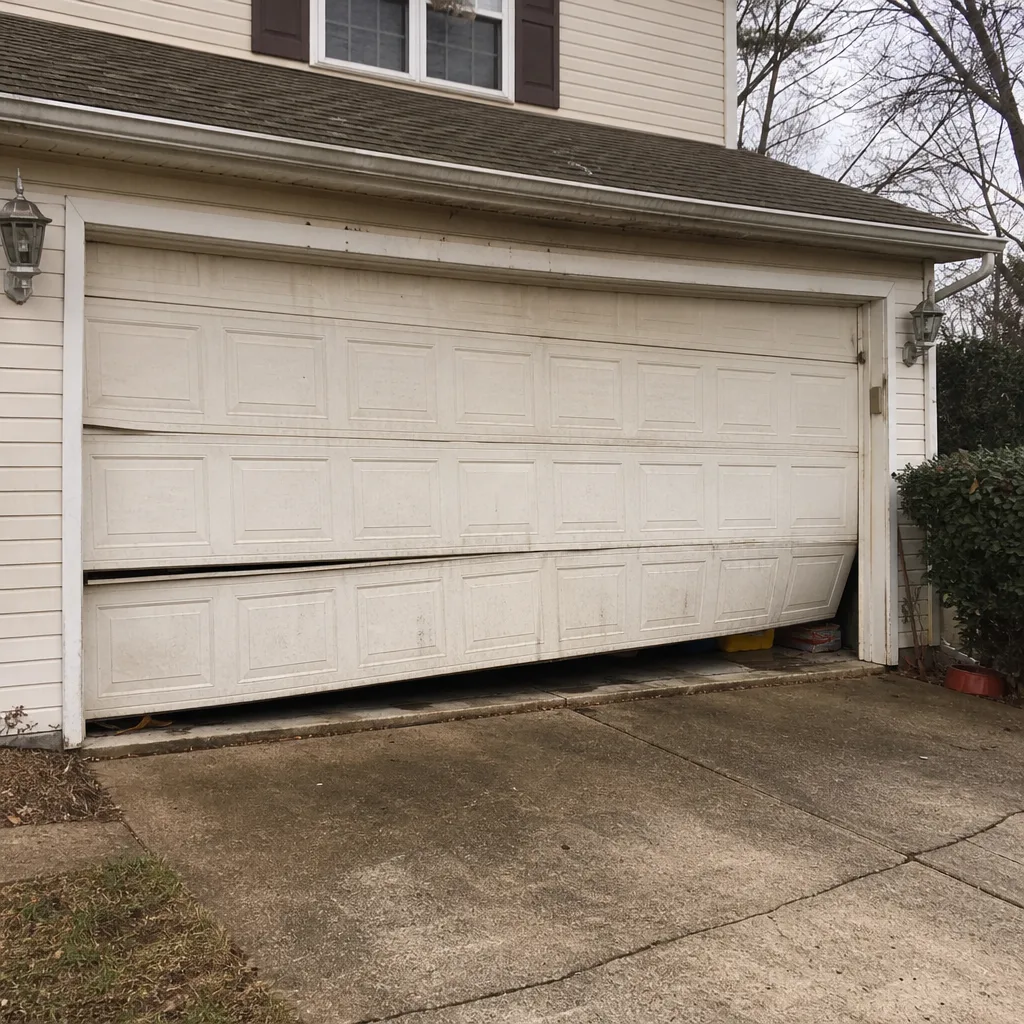 Before
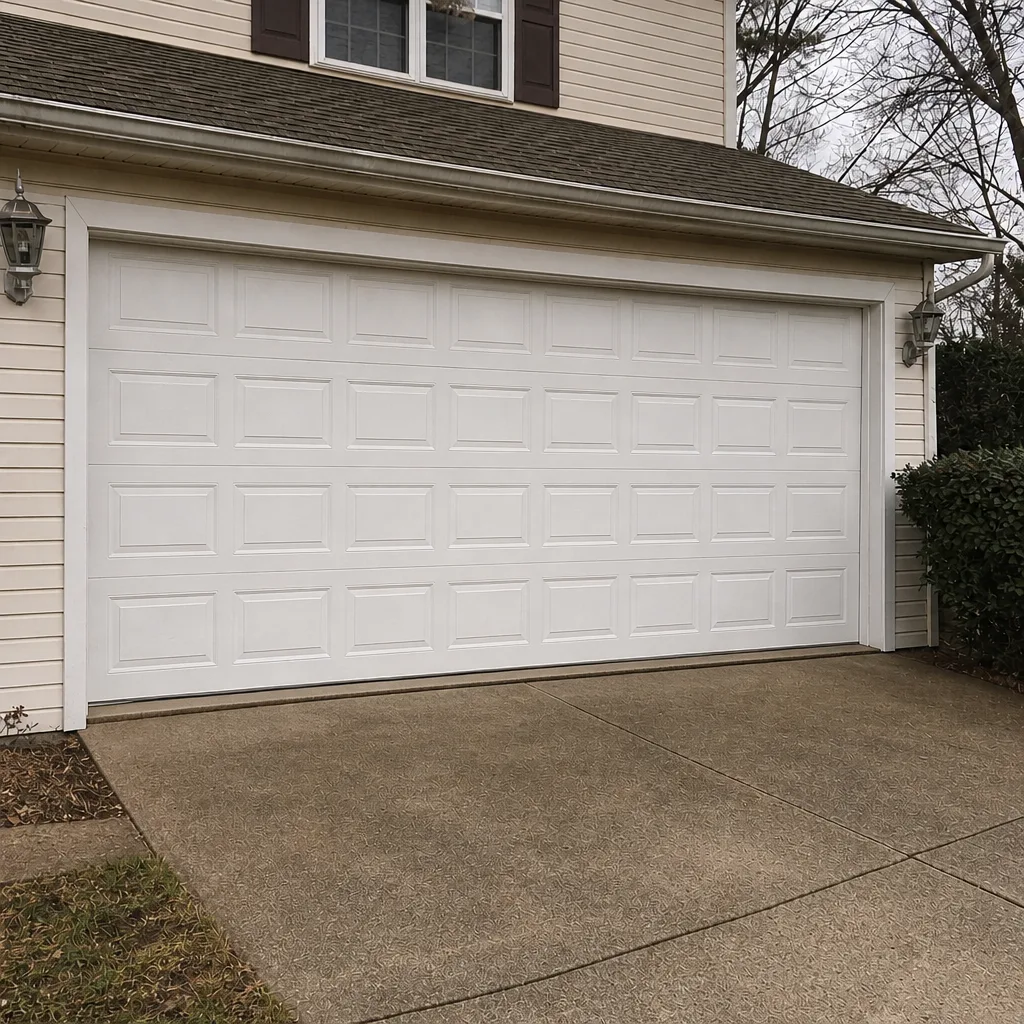 After
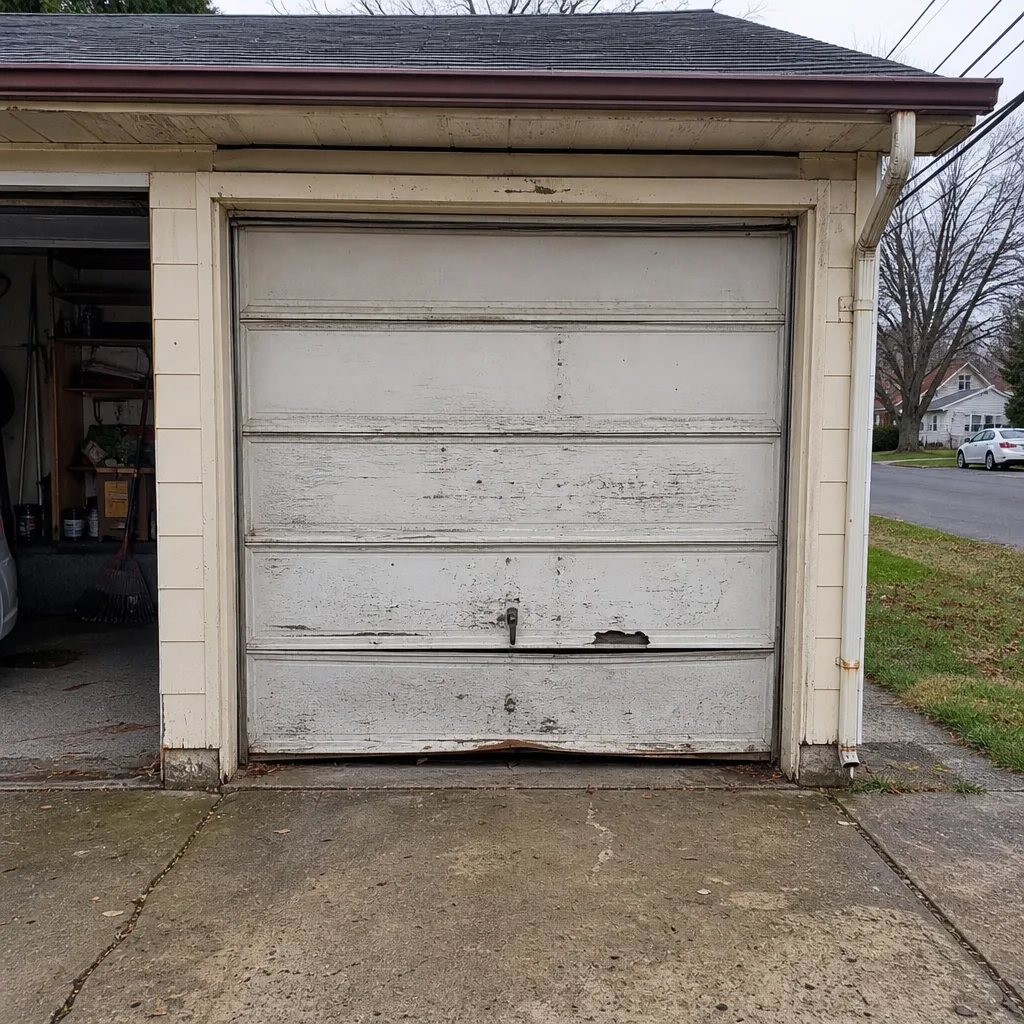 Before
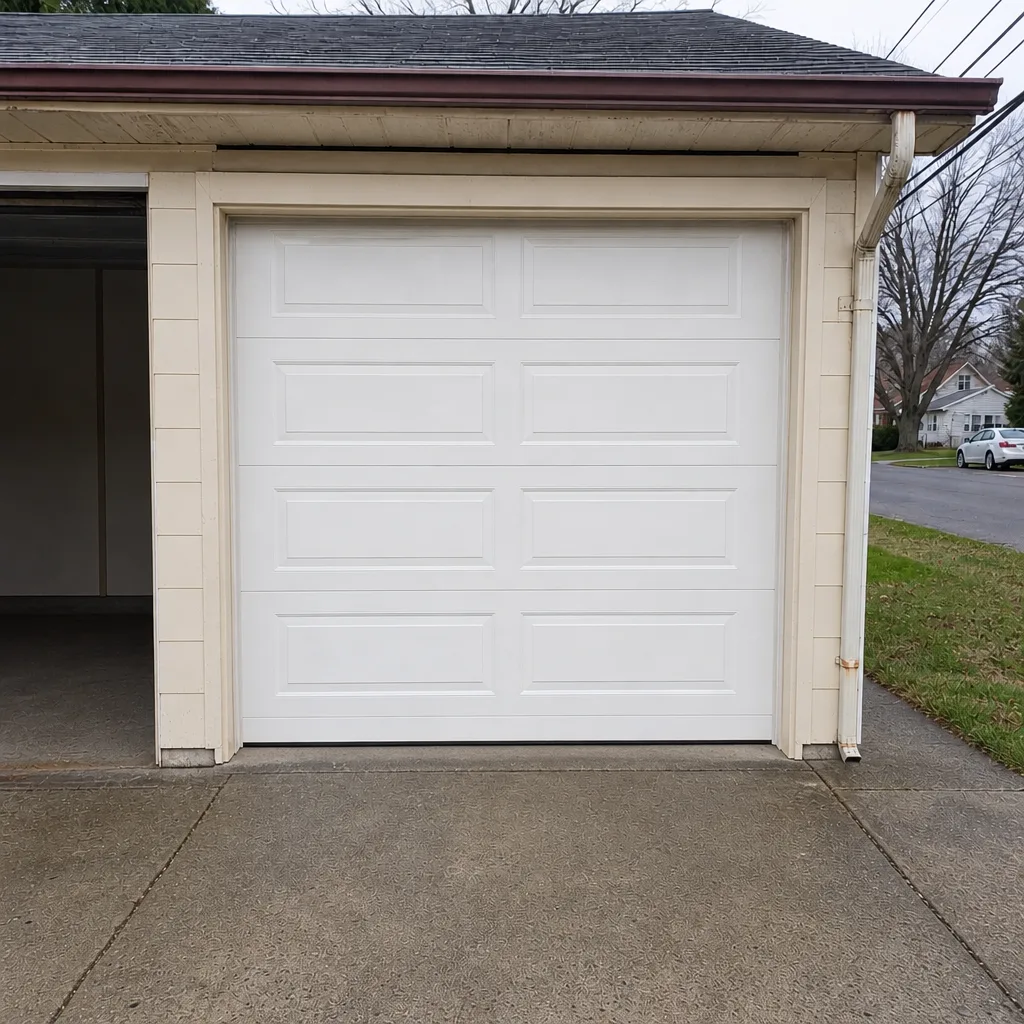 After
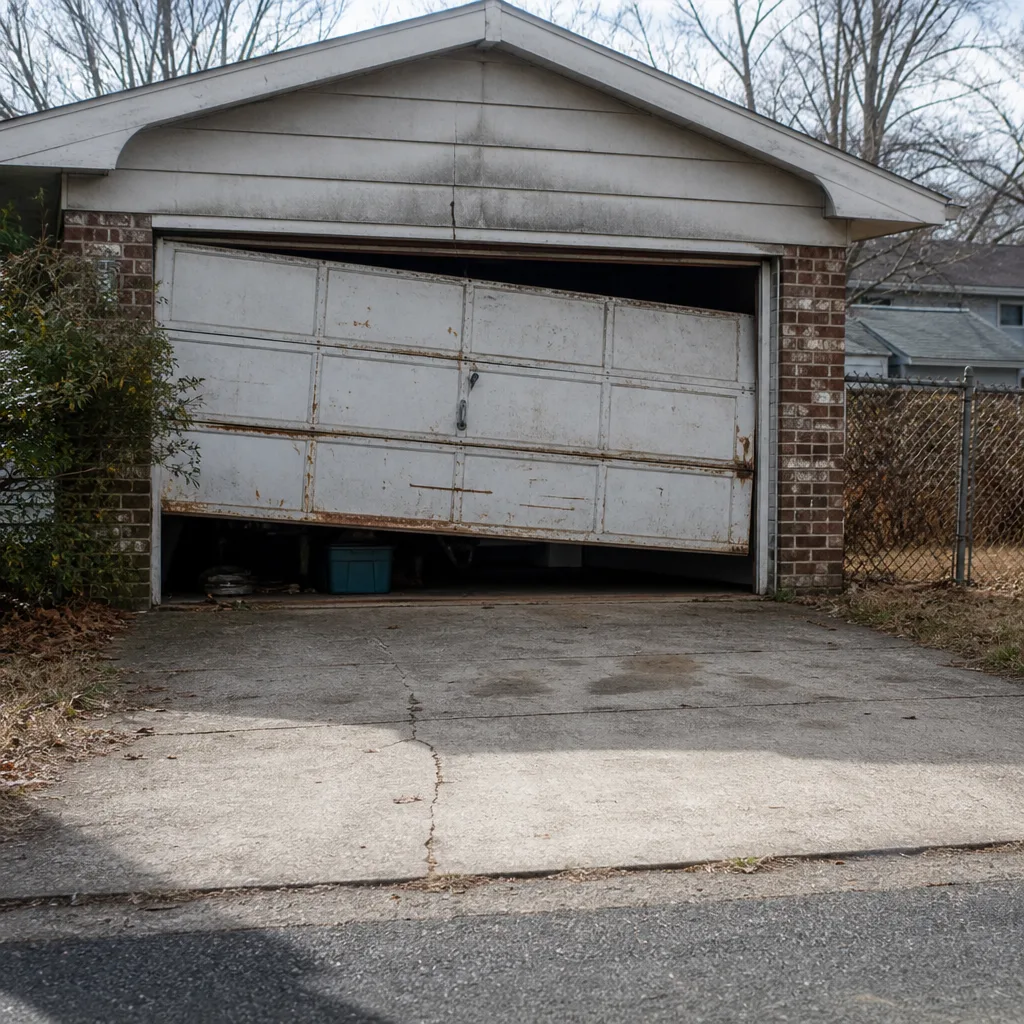 Before
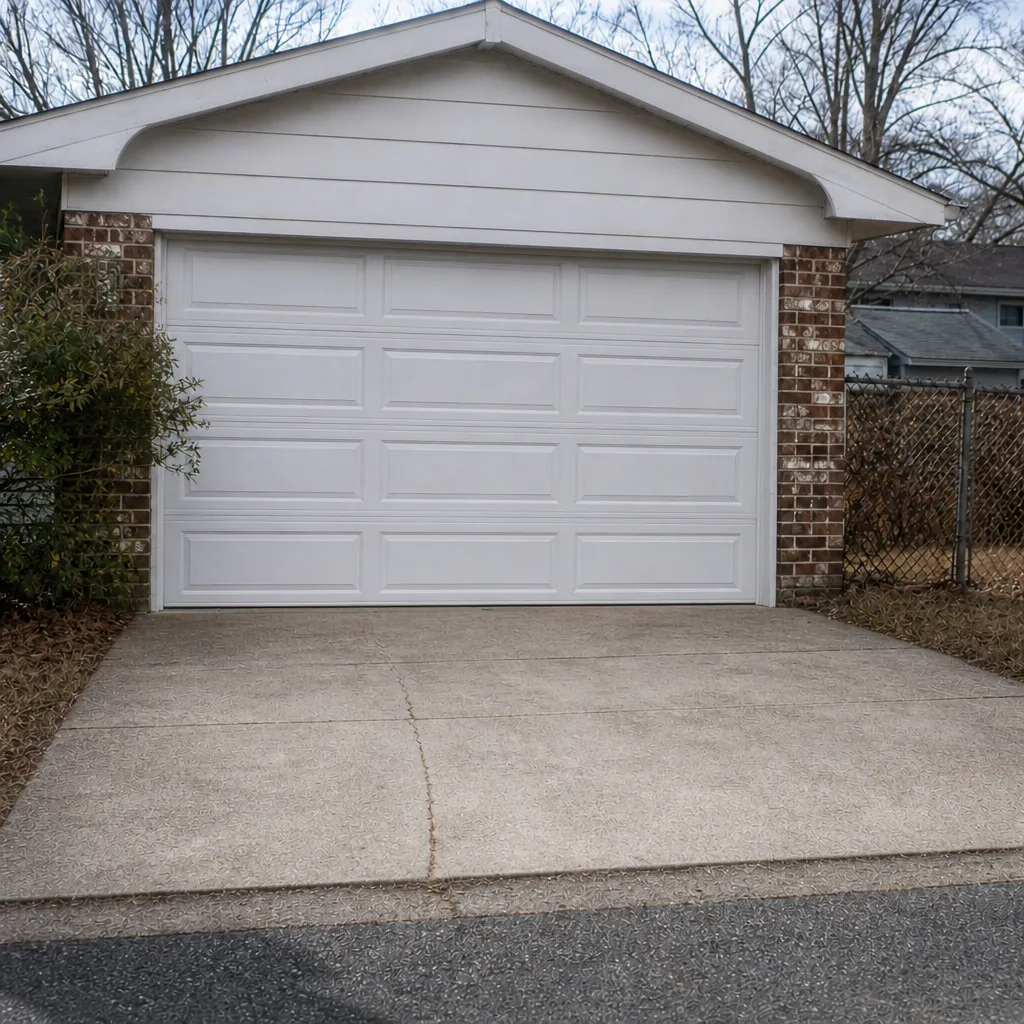 After
When to Call a Professional
Call a technician when the door fails the two-finger balance test, when you see a visible gap or unspooled coil in either spring, when a cable looks frayed, when the track has moved more than an inch out of plumb, or when the door reverses with no sensor fault and the balance test passes. Call immediately if the door is stuck open, dropping on its own, or has come off one track. Those are safety and security problems, and a same-day slot matters.
We work with each of the eight major brands we handle, so you don’t spend time hunting down “the LiftMaster guy” or “the Wayne Dalton guy” – we’re the same number for both. Garage Door Repair Brick offers free estimates in Brick Township – call (888) 569-3530. We answer 24/7, with fast dispatch from 7am to 7pm, Sunday through Friday.
The price you get is the price you pay. We quote per job by written estimate, and nothing starts until you’ve agreed to that number. Emergency work isn’t priced higher – it’s the same job with a faster clock, and the estimate reflects that before we start.
Frequently Asked Questions
Most often it’s a spring tension problem, not the safety sensors. When a torsion spring loses tension, the door is heavier than the opener expects, so the opener’s resistance detector reads the strain as an obstruction and reverses the door. Run the two-finger balance test first; if the door is heavy or crashes down, the springs are the cause. Call (888) 569-3530 for an exact quote – estimates are free.
Yes, in most cases. Same-day service is available when you call before the day fills, and our dispatch runs from 7am to 7pm, Sunday through Friday. We’re closed Saturday; a Saturday call gets booked into the next opening. Call (888) 569-3530 – we answer 24/7.
No. We quote the job in writing before any work starts, and the written estimate is the price. If we find something during the repair that changes the scope, we tell you what it is and what it costs before we continue, and you decide. Call (888) 569-3530 for a free estimate.
The local professionals we connect you with are licensed and insured as New Jersey requires. They work on their own credentials, which we verify before we send anyone to your door. Call (888) 569-3530 to talk through your door and get an exact quote – estimates are free.
We work on eight major brands: LiftMaster, Chamberlain, Genie, Clopay, Amarr, Wayne Dalton, Craftsman, and Raynor. That covers the opener motor and the panels, so a single call handles the diagnosis whether the fault is in a LiftMaster logic board or a Wayne Dalton hinge. Call (888) 569-3530 – estimates are free.
Repair pricing depends on which of the four categories the fault falls in. A hardware fix like worn rollers or a hinge is typically the least expensive, a track adjustment sits in the middle, and a torsion spring repair is at the higher end because of the skill and safety gear involved. We don’t quote a range here because the answer depends on your specific door – call (888) 569-3530 and we’ll give you a written estimate at no charge.
Use the manual disconnect: pull the red release cord, then lift the door by hand. If it lifts easily and balances, the fault is in the opener. If it’s heavy or crashes down, the fault is in the door. Call (888) 569-3530 and we can talk through the symptom before dispatching.
The Bottom Line
Four categories cover nearly every garage door problem in Brick Township: spring tension, track alignment, opener signal, and hardware wear. Two safe tests – the disconnect and the two-finger balance – tell you which category you’re in within a minute. Match the sound to the part with the symptom matrix and you’ve covered most of what a technician will do on the first visit. Anything involving a torsion spring or a lift cable stops the DIY track, and that’s not caution talking, it’s the physics of stored energy. The rest of the troubleshooting is yours to run. When it’s time to hand it off, we’re the same number for eight brands. Call (888) 569-3530 for a free estimate.
Written by the team at Garage Door Repair Brick.