
Last updated November 21, 2026
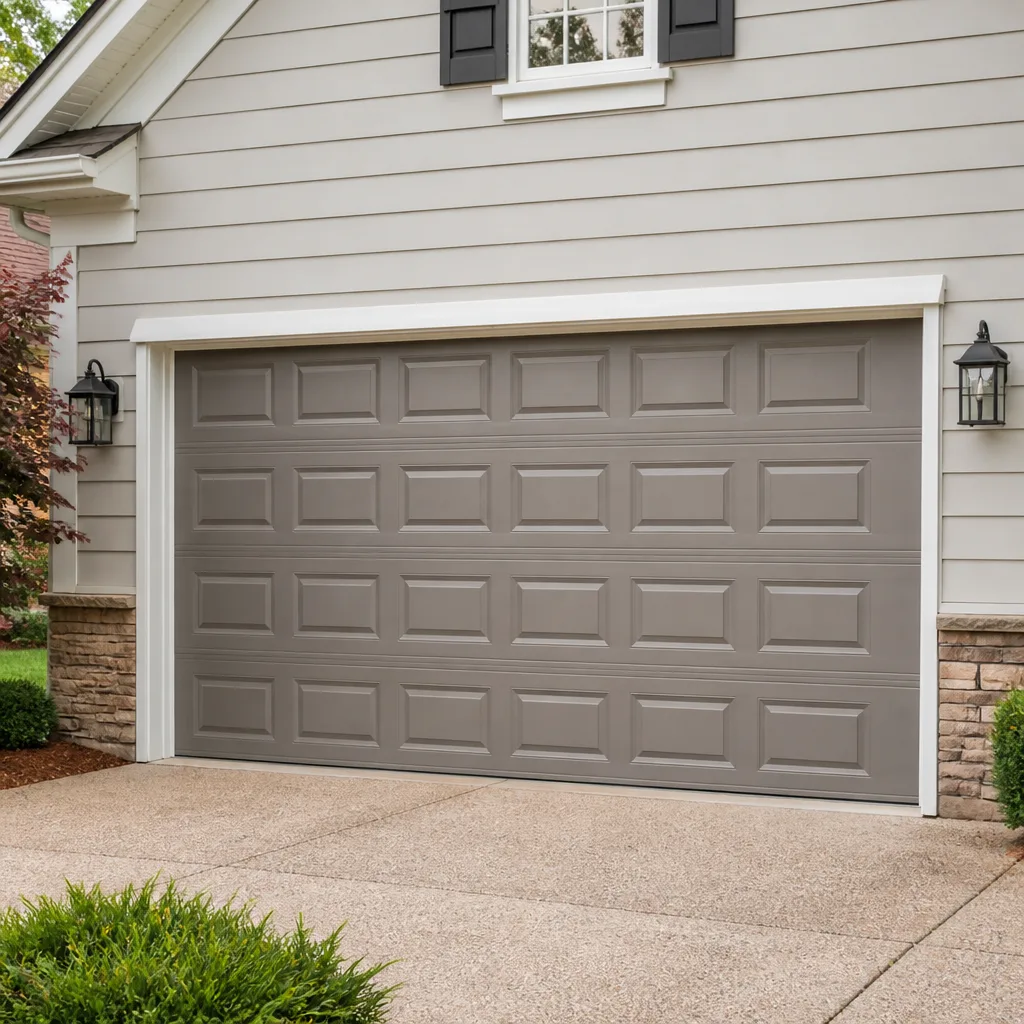 Raised-panel steel
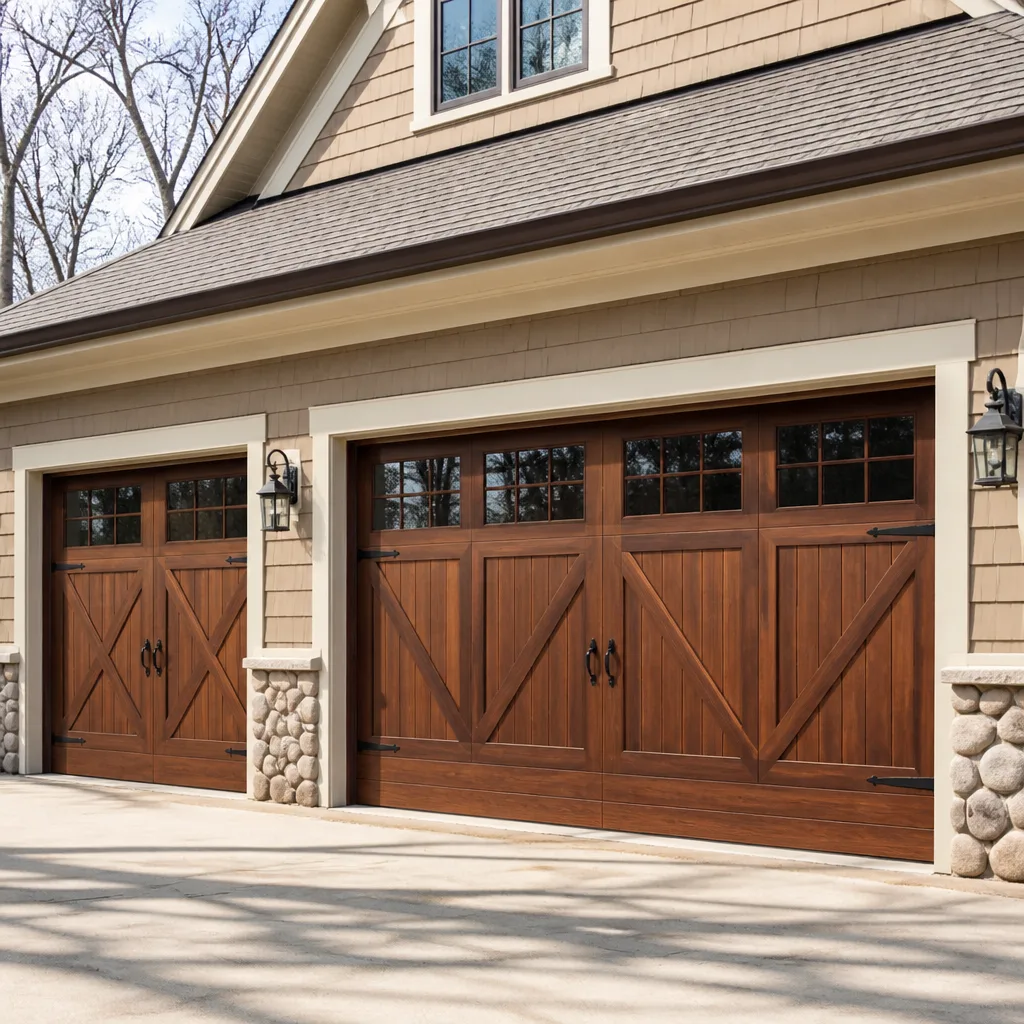 Carriage house
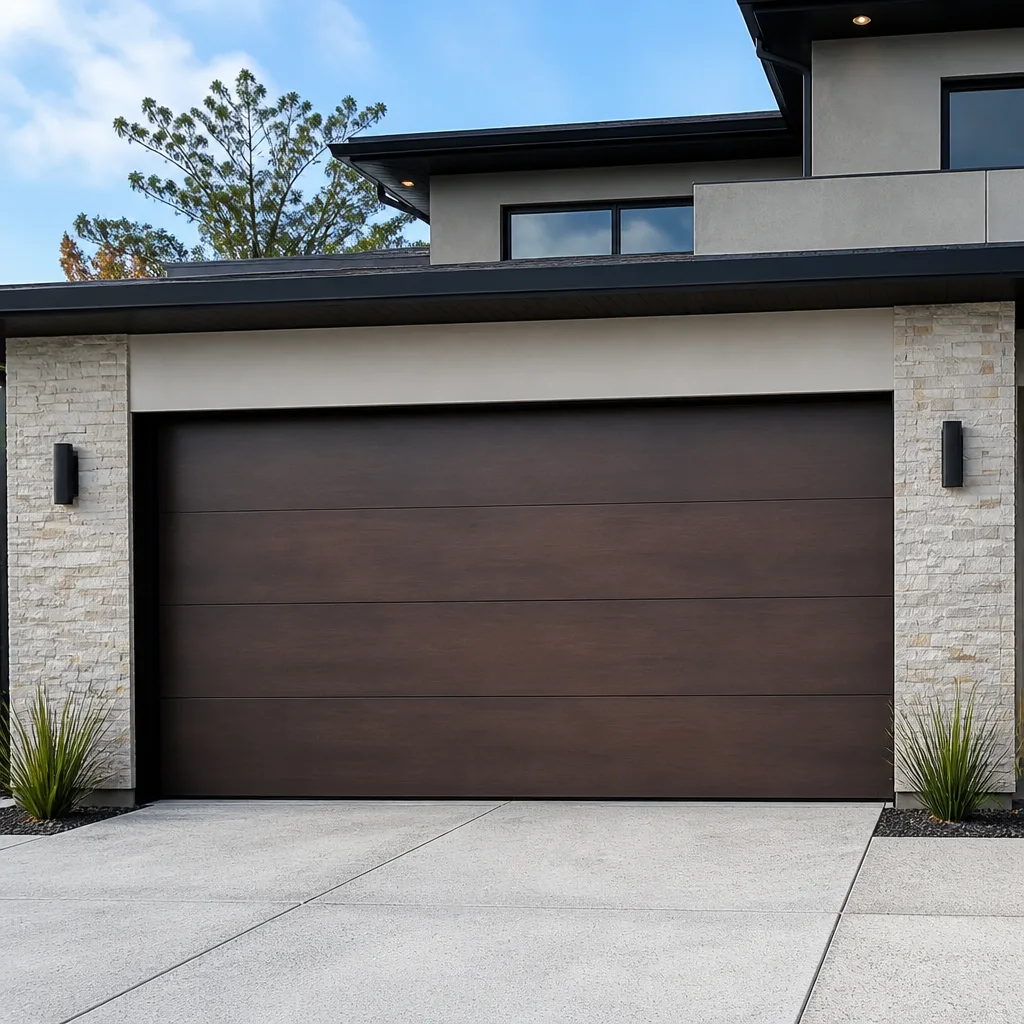 Modern flush
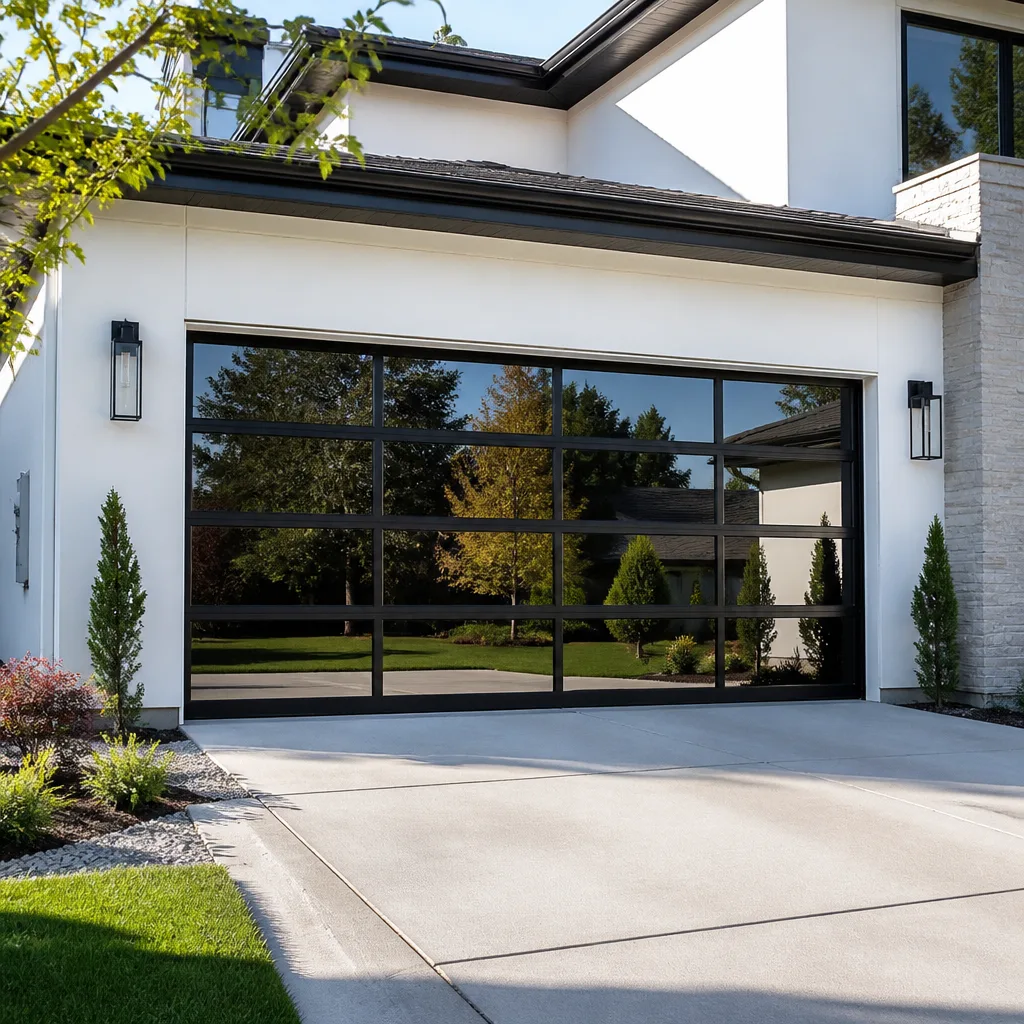 Full-view glass
 LiftMaster openers
 Chamberlain openers
Full 25-point door and opener safety check with every visit - springs, cables, rollers, tracks, and your LiftMaster or Chamberlain opener included
You get a price before we start. It does not change when the pro arrives.
Get your free estimateGarage Door Warning Signs: A Brick Township Homeowner’s Reference Guide
A torsion spring doesn’t snap without warning. The day before it fails, it usually makes a specific sound under load, a low creak at the top of the door’s travel. Most homeowners hear it, decide it’s nothing, and go back inside. Then one morning the door comes up six inches and stops, and the car is trapped. That gap between the first sound and the final failure is where this guide lives. We work on garage doors across Brick Township every week, and the failures we see are almost never sudden. They announce themselves. Here’s how to read the signals, which ones mean stop using the door today, and which ones give you a few days of safe operation while you schedule a repair.
Quick Answer
Garage door warning signs cluster into three categories: sounds (grinding rollers, a strained opener motor, a creaking spring), visual defects (gaps in a spring coil, frayed cables, bent tracks), and operation changes (hesitation, uneven travel, reversal). A creaking or visibly gapped spring, a frayed cable, or a door that reverses on its own means stop using the door and call a professional. Most other warning signs allow a few days of careful use while you book a repair.
Styles & brands we work with
- Raised-panel steel
- Carriage house
- Modern flush
- Full-view glass
- LiftMaster openers
- Chamberlain openers
Table of Contents
- Sound-Based Warning Signs and What They Point To
- Visual Warning Signs: Springs, Cables, and Tracks
- Operational Warning Signs: Hesitation, Uneven Travel, and Reversal
- Which Warning Signs Mean Stop Now and Which Mean Schedule a Repair
- How to Safely Operate the Door Manually When Failure Looks Imminent
- Why Brick Township Doors Age the Way They Do
- What a Proper Diagnosis Looks Like
- When to Call a Professional
Sound-Based Warning Signs and What They Point To
Sound is the earliest signal a garage door gives you, and it’s the one most homeowners filter out because it comes on gradually. Each component has a distinct failure noise. Learning to tell them apart means you can describe the problem accurately before anyone arrives, which shortens the repair. When you call us for garage door repair in Brick Township, the first question we ask is what the door sounds like, and a homeowner who can answer that specific question saves time and often avoids a second visit.
Grinding, scraping, or a metallic screech
Grinding usually means rollers that have lost their bearings or a track that has shifted out of alignment. If the sound is a high screech that tracks the door’s travel, the rollers are the likely source. A grinding noise that comes and goes with the door’s position points more toward a bent track section catching a roller as it passes. Either way, continued use wears the roller stem and puts extra load on the opener, turning a cheap roller swap into a bigger repair.
A groaning or strained opener motor
When the opener itself groans, hums without moving the door, or sounds like it’s working harder than it used to, the motor is compensating for resistance somewhere else. On a LiftMaster or Chamberlain unit, that resistance often traces back to a stiff spring, a binding track, or a door that has gone out of balance. The motor is usually the messenger, not the problem. This is why we treat garage door opener repair as a diagnostic service, not just a parts swap.
A creak or pop at the top of the door’s travel
This is the sound that matters most. A low creak at the top of the door’s travel, or a single pop when the door reaches full open, often points to a torsion spring that’s fatigued and about to fail. The spring is under maximum load in that position. A tired winding cone, a spring that has lost tension, or a coil with hairline cracks will announce itself with that creak before it lets go. Listen for it in the morning when the door is cold. Cold metal under load is at its most brittle, and the sound is easiest to catch.
Rattling or banging during travel
Loose hinges, worn rollers, or a door panel that has come slightly loose from its hinge will rattle as the door moves. It’s usually the least urgent of the sound warnings, but it accelerates wear everywhere else. Loose hardware also wears the panel’s hinge points, which turns a re-tightening into a panel replacement over time.
What to listen for, in order of urgency
- A creak or pop at the top of the travel: likely spring fatigue, treat as urgent.
- A grinding or scraping that follows the door’s movement: likely rollers or track.
- A groaning opener motor that struggles: resistance somewhere in the mechanism, diagnose soon.
- A steady rattle: loose hardware, schedule when convenient.
Visual Warning Signs: Springs, Cables, and Tracks
Most garage door failures leave a visible trace before they break. You don’t need to understand torsion math to spot these signs, and you don’t need to touch anything. Look, don’t reach. Springs, cables, and brackets all store or hold serious tension, and a visual inspection from the floor with the door closed is the safe way to check. On a standard Brick Township two-car garage, the whole visual inspection takes about two minutes.
Torsion springs: the gap and the rust
Torsion springs mount on the shaft above the door. Look for a visible gap between coils when the door is closed, a winding cone that looks loose or has pulled away from the spring coil, or heavy rust along the coil. A gap in the coil is a structural sign the spring has begun to fail. Rust weakens the wire and accelerates fatigue. Either sign on a spring means the door should not be used until it’s inspected.
Extension springs and safety cables
If your door uses extension springs along the horizontal tracks, look at the safety cable that runs through the spring. A frayed, kinked, or slack cable is a warning sign. So is a spring that hangs at a different length from its partner on the other side. Mismatched extension springs will pull the door unevenly and load the opener.
Cables
Lift cables run from the bottom corners of the door up to the drum. Inspect the cable where it wraps and near the bottom bracket. Frayed strands, a cable that has jumped its drum groove, or a cable that looks slack on one side are all signs to stop using the door. A snapped cable can whip, and a door with one good cable is carrying the load on a single point.
Tracks and rollers
Run your eye down the vertical and horizontal tracks. Any bend, kink, or track that’s pulled away from the door frame at its mounting points is a problem. On the rollers, look for flat spots, cracks in the nylon wheel, or a roller stem that sits crooked in the hinge. Worn nylon rollers are the usual suspect behind a grinding noise.
Panels and hinges
Check for cracked panels, especially on doors that face long afternoon sun, and loose hinges. A panel that’s cracked near a hinge or a bottom bracket puts uneven load on the mechanism and can catch on the frame.
Operational Warning Signs: Hesitation, Uneven Travel, and Reversal
How the door moves tells you as much as how it sounds. These signs are often the last stop before failure, because they reflect a mechanism that has already lost balance. Watch the door through one full open-and-close cycle from a safe spot on the floor, not standing under it.
The door hesitates or stutters
Hesitation, a stutter mid-travel, or a door that starts and stops during a single cycle usually points to a binding track, a worn roller catching on a joint, or a logic board issue in the opener. On a Genie or LiftMaster opener, a stutter can also come from a limit switch that needs adjustment. Hesitation is worth a same-week call, because binding that gets ignored wears the opener’s gears.
The door travels unevenly or looks crooked
A door that rises higher on one side than the other is out of balance. On a torsion setup, this can mean one spring in a matched pair has lost more tension than its partner. On an extension setup, mismatched springs or one slack cable. Uneven travel puts a twisting load on panels and hinges and should be corrected before it cracks a section.
The door reverses before closing
If the door reverses on its own before contacting the floor, the safety sensors are obstructed, misaligned, or failing, or the opener’s force settings are off. Reversal is a safety feature, and a door that reverses on a clear path has a sensor problem worth fixing right away. A door that reverses on an obstructed path is doing its job, but check the sensor alignment anyway, because a sensor that’s drifted can leave the door reversing on sunlight glare or a small object.
The opener runs but the door doesn’t move
You hear the motor, but the door stays put. That usually means a stripped gear in the opener, a broken drive belt or chain, or a disconnected emergency release that’s been pulled. This is often a straightforward garage door opener repair rather than a full unit replacement, so it’s worth diagnosing before assuming you need a new opener.
The door comes down hard
A door that slams down rather than settling means the spring system has lost tension or the opener’s down-force is set too high. That’s a stop-now sign, because a heavy door descending with nothing to slow it is a hazard to anything and anyone in its path.
Which Warning Signs Mean Stop Now and Which Mean Schedule a Repair
The most useful thing this guide can give you is a clear line between “keep using it carefully” and “stop using the door.” Homeowners often misjudge this in both directions, ignoring a spring that’s about to fail and panicking over a rattle that can wait a week. Here’s the split we use.
Stop using the door immediately if you see or hear:
- A creak or pop at the top of travel, or a visibly gapped torsion spring.
- A frayed, slack, or jumped lift cable.
- A door that slams or drops when closing.
- A bent track that’s catching a roller.
- A door that travels visibly crooked.
- Any sign of a broken spring, including a door that comes up a few inches and stops.
These signs mean the door’s counterbalance or guidance system has failed or is about to. A door with a failed spring can come down hard, and a door with a frayed cable is one strand away from dropping a corner. Stop, and book a professional inspection.
You can schedule a repair this week if you notice:
- A steady rattle from loose hardware.
- Grinding from worn rollers that hasn’t affected travel.
- A sensor that needs realignment but the door otherwise operates normally.
- A stutter that doesn’t repeat on every cycle.
Call urgently if:
- Your car is trapped inside and you need the door working today.
- The door is stuck open and you can’t secure it safely.
- You need the door usable before a scheduled appointment or trip out of town.
When a door is stuck open, the house is exposed. That’s a security issue as much as a repair issue, and it’s the kind of call we handle under emergency garage door service. Emergency service isn’t an upsell on our end; it’s part of the core offering because a failed door is a safety and security problem, not just an inconvenience.
How to Safely Operate the Door Manually When Failure Looks Imminent
If a warning sign says stop using the door, the right move is usually to stop using it, not to try to operate it manually for a few more days. But there are situations where you need to get the door up or down by hand, and the sequence below is the safe way to do it. Read it first, then act.
Before you do anything
Never stand under the door or reach above it to handle hardware. Never try to adjust a spring, a winding cone, or a bottom bracket yourself. Springs and bottom brackets hold the door’s full weight in stored tension, and both can release suddenly. The most common serious garage door injury comes from a homeowner trying to help a failing spring. That’s a one-call-for-a-trained-professional situation, full stop.
The safe sequence for manual operation
- Close the door first, if it’s safe to. If the door is already open and the spring is suspect, let it down gently with help from someone who can spot the bottom edge, and stay out of the path of travel.
- Pull the emergency release cord on the opener’s trolley. It hangs from the carriage and disconnects the door from the motor. Pull straight down, not sideways.
- Lift the door slowly and feel the weight. A healthy balanced door lifts with one hand and stays where you put it. If the door feels heavy or falls when you let go, the spring system has failed and the door shouldn’t be used manually at all. Leave it closed.
- If the door lifts with manageable weight, raise it all the way and prop or secure it if you must leave it open. Never leave a door partially open under its own weight.
- Keep the door closed and secured if you can’t manage the weight. Reconnect the release after opening a door manually so the opener isn’t run against a disconnected trolley.
- Book the repair. Manual operation is a stopgap to get a car out or secure the house, not a workaround.
If the door is a two-car insulated steel door, the weight is often more than one person should move. A Brick Township home with a wide door should start with a professional call rather than a manual lift. If you’re unsure, call us before trying. Our technicians have up to 12 years of experience with spring systems, and a phone description of what you’re seeing is often enough for us to tell you whether to touch the door at all.
Why Brick Township Doors Age the Way They Do
Brick Township sits on the Jersey Shore with a mix of established neighborhoods, newer construction, and a lot of homes whose original doors are now well into their service life. That mix matters, because the age and condition of the door, not the calendar, drive when warning signs appear. The local conditions that shape how these doors wear come down to a few real factors.
Humidity and salt air in the summer. Brick Township summers are humid, and the shore’s salt exposure in the air accelerates corrosion on springs, cables, and hinges. A door that spends its summers near the coast ages its steel components faster than an identical door inland. If you live near the water, check for rust on springs and cables more often.
Cold snaps. Winter cold makes metal brittle and springs less forgiving. Torsion springs under load are at their most fragile in a cold morning, which is why the creak at the top of travel is easiest to catch in the winter. If you hear the sound in January, don’t wait until spring.
Thermal cycling on panels. Doors that face west or south in Brick Township take afternoon sun and cold nights, and that daily expansion-contraction cycle stresses panels, especially on older steel doors. A small panel crack near a hinge is often the first sign the door is aging.
Older doors and older openers. A lot of the homes in Brick Township still run the original openers, including older LiftMaster and Chamberlain units that work fine as long as the door stays balanced. When the door’s balance drifts, those older openers wear faster. Diagnosing the opener separately from the door is part of how we avoid steering a homeowner into a replacement they don’t need.
None of this is unique to one street or one neighborhood. It’s just what happens to garage doors in a coastal New Jersey climate over a decade or two. The warning signs above are the same everywhere, but how quickly they show up depends on the door, the exposure, and the maintenance history.
What a Proper Diagnosis Looks Like
A garage door is a system: opener, springs, cables, tracks, rollers, sensors, panels, hinges. A warning sign in one corner of the system can have its root in another. A noisy opener is often a stiff spring. A reversing door is often a sensor. A grinding door is often a roller. Getting the diagnosis right is the difference between a fix that lasts and a cycle of return visits.
We work on the actual components of common residential systems, so the diagnosis is specific to the door, not generic. That means we’re familiar with LiftMaster, Chamberlain, Genie, Clopay, Amarr, Wayne Dalton, Craftsman, and Raynor systems, including the LiftMaster and Chamberlain smart-home platforms used on many newer homes. It means a spring issue is handled as its own repair, with the matched pair treated as the system it is. It means a bent track is straightened or corrected rather than blamed on the opener. And it means a repair-first approach: fix what’s failing, don’t replace a door that has years left.
The practical difference for a Brick Township homeowner is that a proper diagnosis includes a visual inspection of the whole system, not just the noisy part. A good technician opens a door, listens, watches the travel, checks the balance, checks the springs and cables, and checks the sensors before recommending anything. You should get a written estimate before work starts, and you should be able to ask why a part needs replacing and get a specific answer.
If you want to see how our repair service is structured, start with the Garage Door Repair Brick page. Spring work is a separate specialty on our end, so if your warning sign is a creak at the top of travel, a gapped coil, or a broken spring, the right page is garage door spring repair.
Common Mistakes to Avoid
- Trying to diagnose a spring with a screwdriver. A spring that’s lost tension is still under heavy load, and a homeowner working on it can turn a routine repair into a serious injury. Look, listen, and call. Don’t adjust.
- Ignoring the creak because the door still works. The creak at the top of travel is the spring announcing fatigue. A door that still operates can still be one cycle away from failing, and the failure usually happens on a cold morning when the car is inside.
- Assuming a noisy opener needs replacing. On most Brick Township doors we see, the opener is struggling because the door or spring is out of balance. A proper garage door opener repair should start with the door’s balance, not with a new motor.
- Letting a door reverse on its sensors without checking them. A door that reverses on a clear path is telling you the sensor needs attention. A misaligned sensor is a small fix; a sensor that’s failed and ignored is a safety concern.
- Greaseless use and no annual look. Nylon rollers and hinges benefit from a light inspection at least once a year, especially on doors near the water. A few minutes of checking four times a year catches rust and wear before they become a failure.
- Replacing the whole door because one panel is damaged. Panel and hardware replacement can often solve a cosmetic problem without a full install. A door that’s structurally sound and balanced doesn’t need to come down.
- Manual operation as a habit. If you’re pulling the release every day to avoid a warning sign, you’re one step from a failure with the door disconnected and the car inside. Manual operation is a stopgap; it isn’t a fix.
- Booking whoever answers first without a written estimate. A written estimate before work starts is the way to avoid surprises. Ask what’s being replaced and why.
See the difference
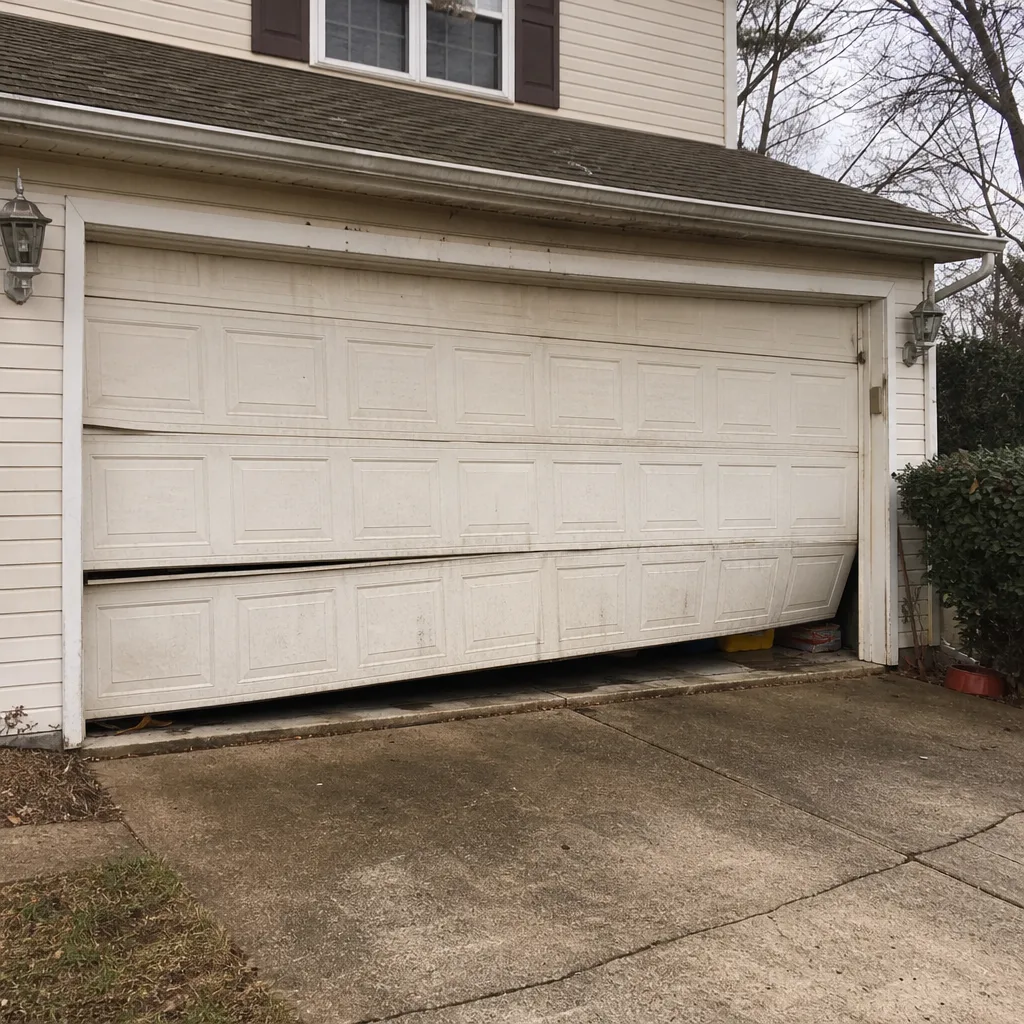 Before
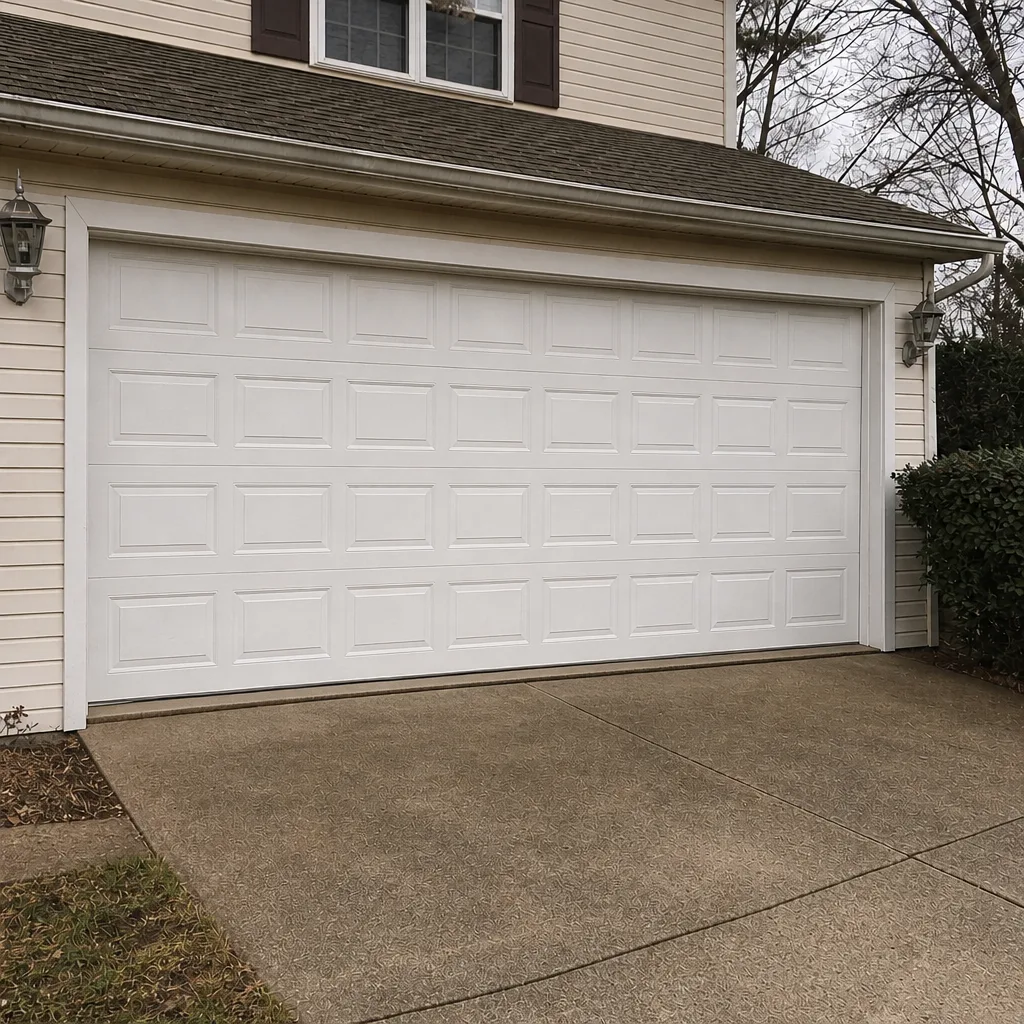 After
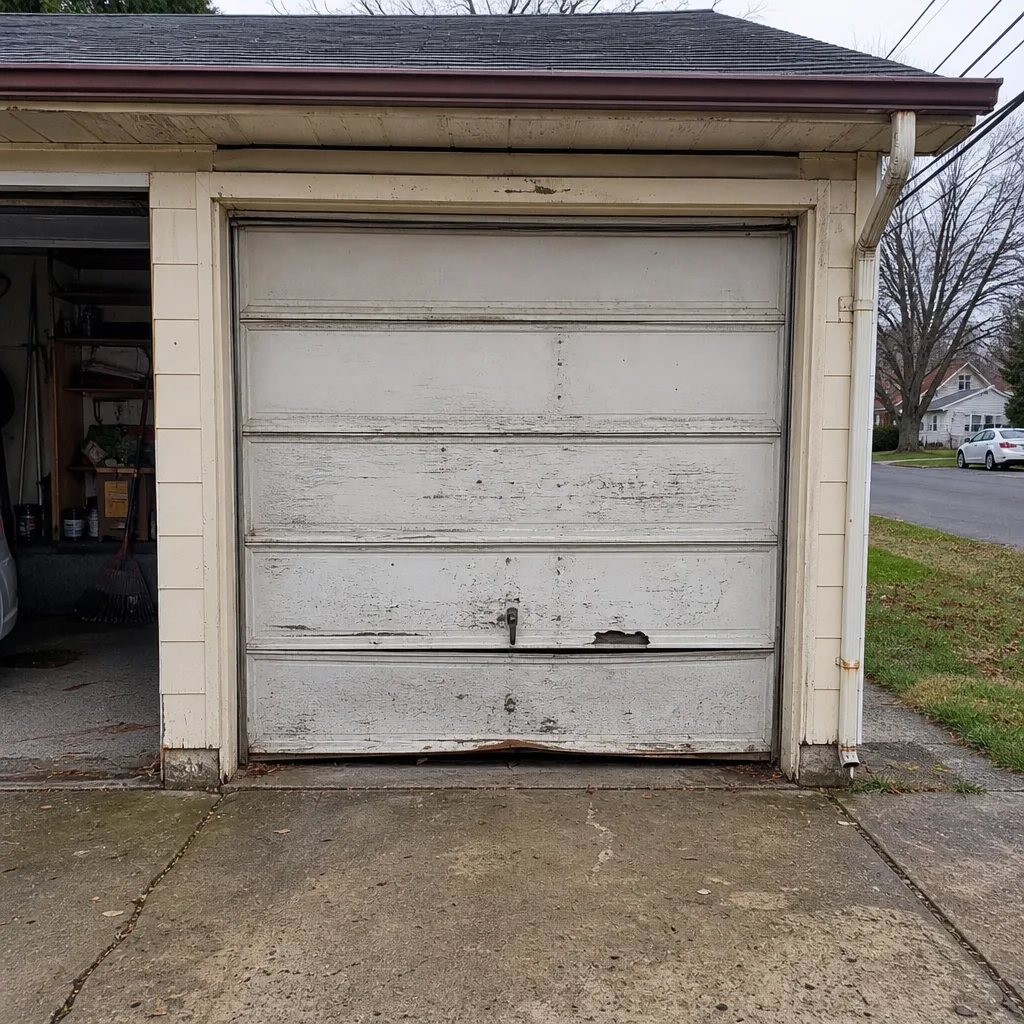 Before
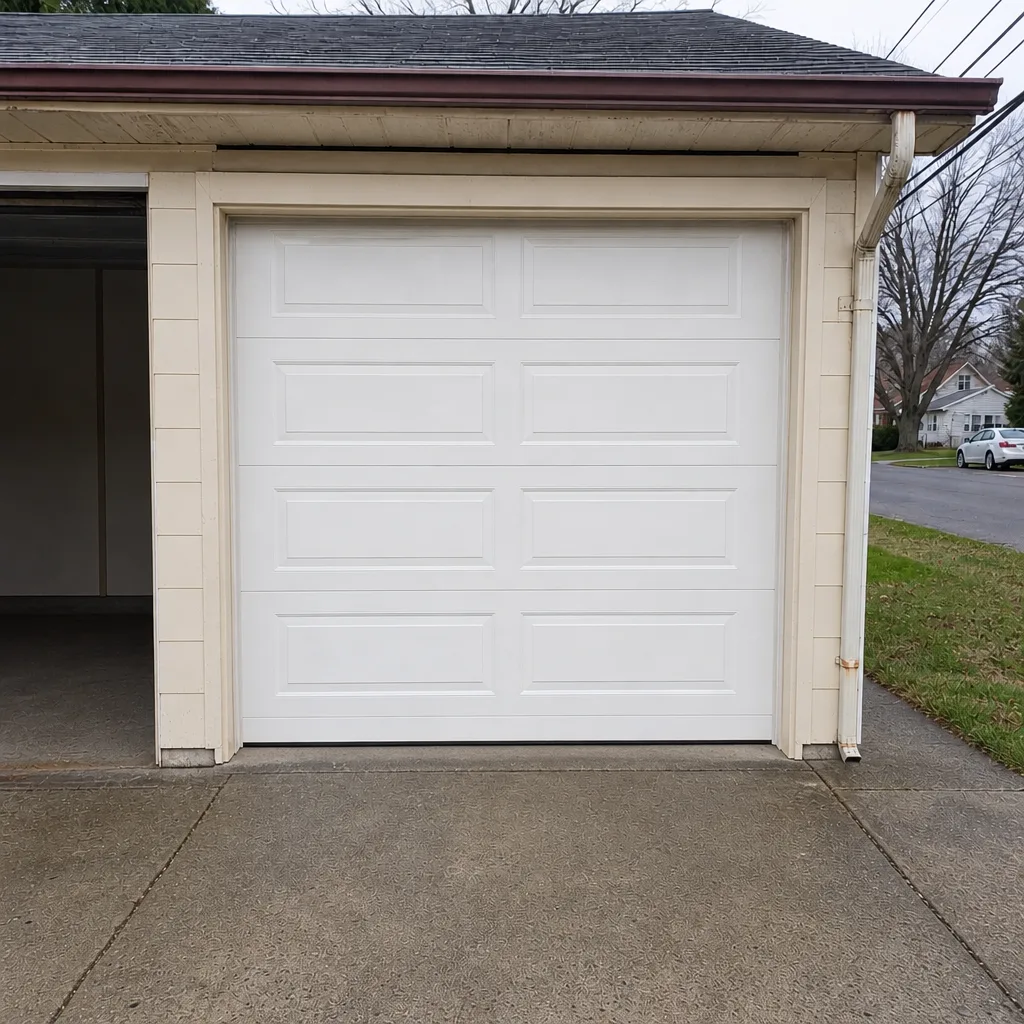 After
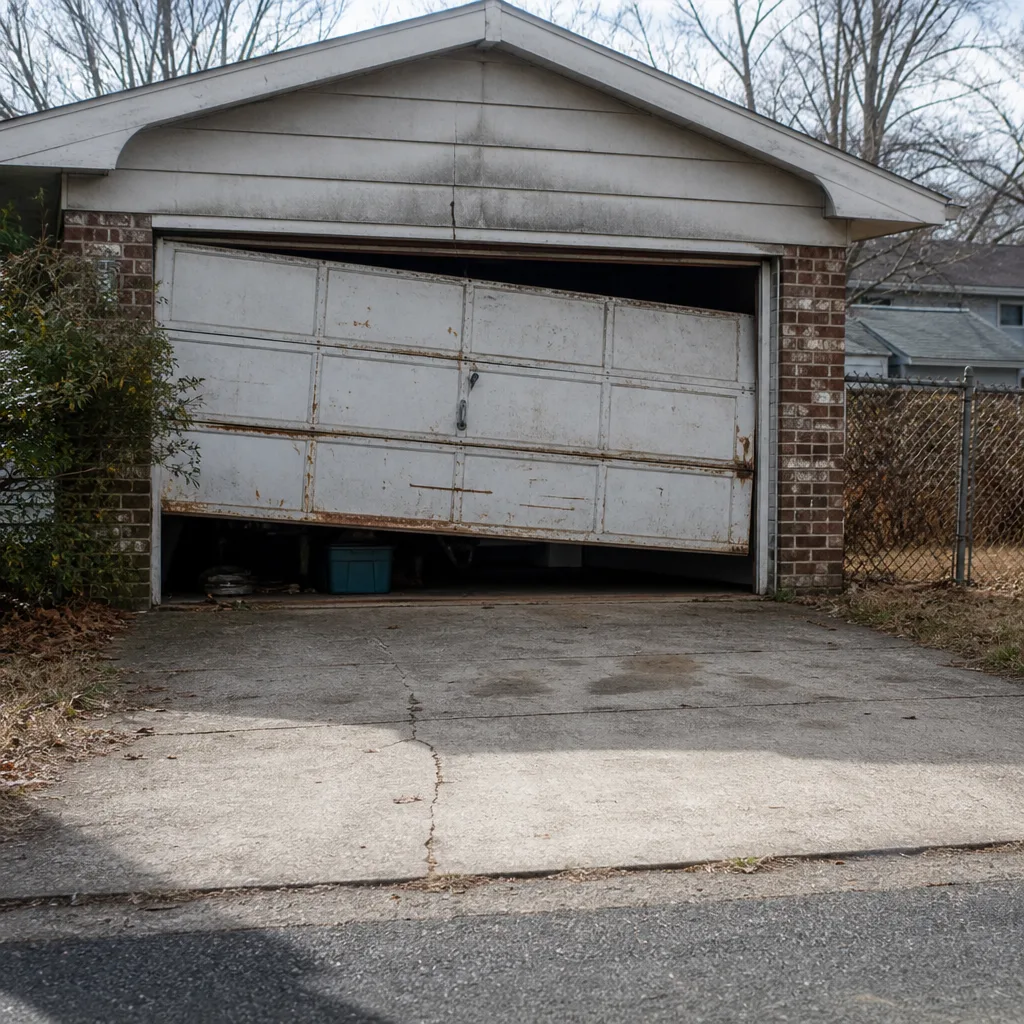 Before
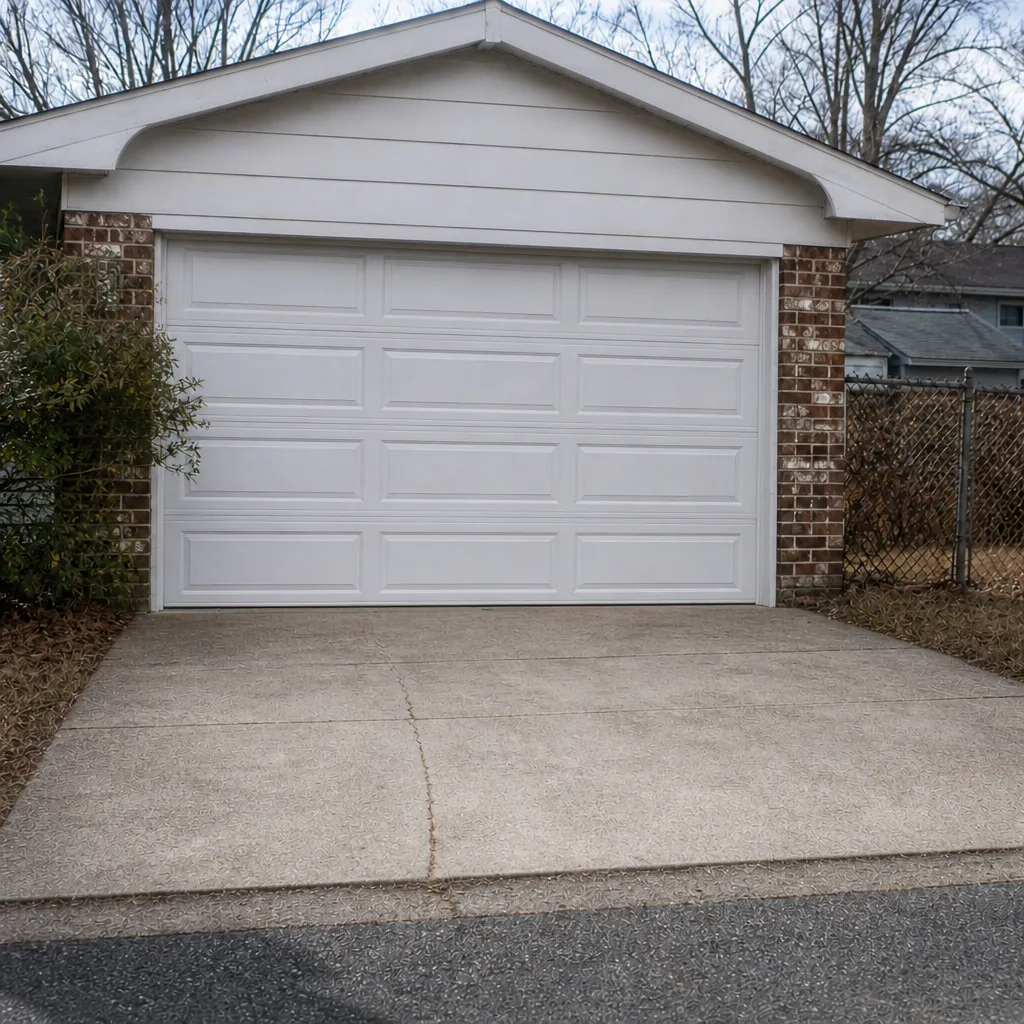 After
When to Call a Professional
Call a professional the moment a warning sign crosses into the stop-now column: a creak at the top of travel, a visible gap in a torsion spring, a frayed cable, a door that slams, a door that travels crooked, or a bent track. Call promptly if your car is trapped, if the door is stuck open and the house is exposed, or if the opener runs without moving the door. Call earlier if you simply don’t want to gamble on the door’s next cycle, and we’ll tell you what the diagnosis points to. Garage Door Repair Brick offers free estimates in Brick Township, and we answer 24/7. Fast dispatch from 7am to 7pm, Sunday through Friday. Call (888) 569-3530.
Frequently Asked Questions
A low creak or pop at the top of the door’s travel. The spring is under maximum load when the door is fully open, so a fatigued spring tends to announce itself at that point. If you hear that sound, stop using the door and call a professional. Call (888) 569-3530 for a free estimate and we’ll diagnose the spring and the rest of the system.
Usually yes, for a few days, if the door otherwise travels normally and the spring isn’t suspect. Grinding is usually a worn roller or a track issue, and it accelerates wear while it’s ignored. Book the repair soon. Call (888) 569-3530 and describe the sound; we can often tell you whether it’s safe to use the door in the meantime.
If the door is heavy when disconnected from the opener and won’t stay in place when you let go, the spring is the problem. If the door is balanced but the opener hums, stutters, or runs without moving the door, the opener or drive is the problem. Call (888) 569-3530 and we’ll walk through a couple of questions to narrow it down before scheduling.
Only to get a car out or secure the house, and only if the door lifts with manageable weight. If the door feels heavy, leave it closed and call. Springs are under high tension and should never be touched. Call (888) 569-3530 and we’ll tell you what to do based on what you’re seeing.
Not usually. Most warning signs point to a component: a spring, a cable, a roller, a sensor, or the opener itself. A proper diagnosis identifies the failing part, and repair is usually the right first step. Call (888) 569-3530 for a free estimate in Brick Township and we’ll tell you what the repair involves and what it doesn’t.
A visual and listen-through once a month, plus a more careful inspection before winter. The shore humidity and cold snaps accelerate wear on springs and cables, so a door near the water deserves a closer look. Call (888) 569-3530 if you’re unsure about anything you find.
A door that fails with the car stuck inside, a door that’s stuck open and can’t be secured, or a stop-now sign like a creak at the top of travel or a frayed cable. We answer 24/7, and fast dispatch runs 7am to 7pm, Sunday through Friday. Call (888) 569-3530.
The Bottom Line
Garage doors fail in slow motion. The spring creaks before it breaks, the rollers grind before they seize, the opener strains before it gives up. A Brick Township homeowner who learns to read those signals turns a trapped-car morning into a scheduled repair. Watch the sounds, look at the springs and cables without touching them, and trust a door that travels straight and lifts with one hand. If a warning sign crosses into the stop-now column, stop using the door and call a professional. Free estimates, a written price before work starts, and a repair-first approach: that’s the whole method.
Call (888) 569-3530 for a free estimate. We answer 24/7. Fast dispatch from 7am to 7pm, Sunday through Friday.
Written by the team at Garage Door Repair Brick.