
Last updated November 21, 2026
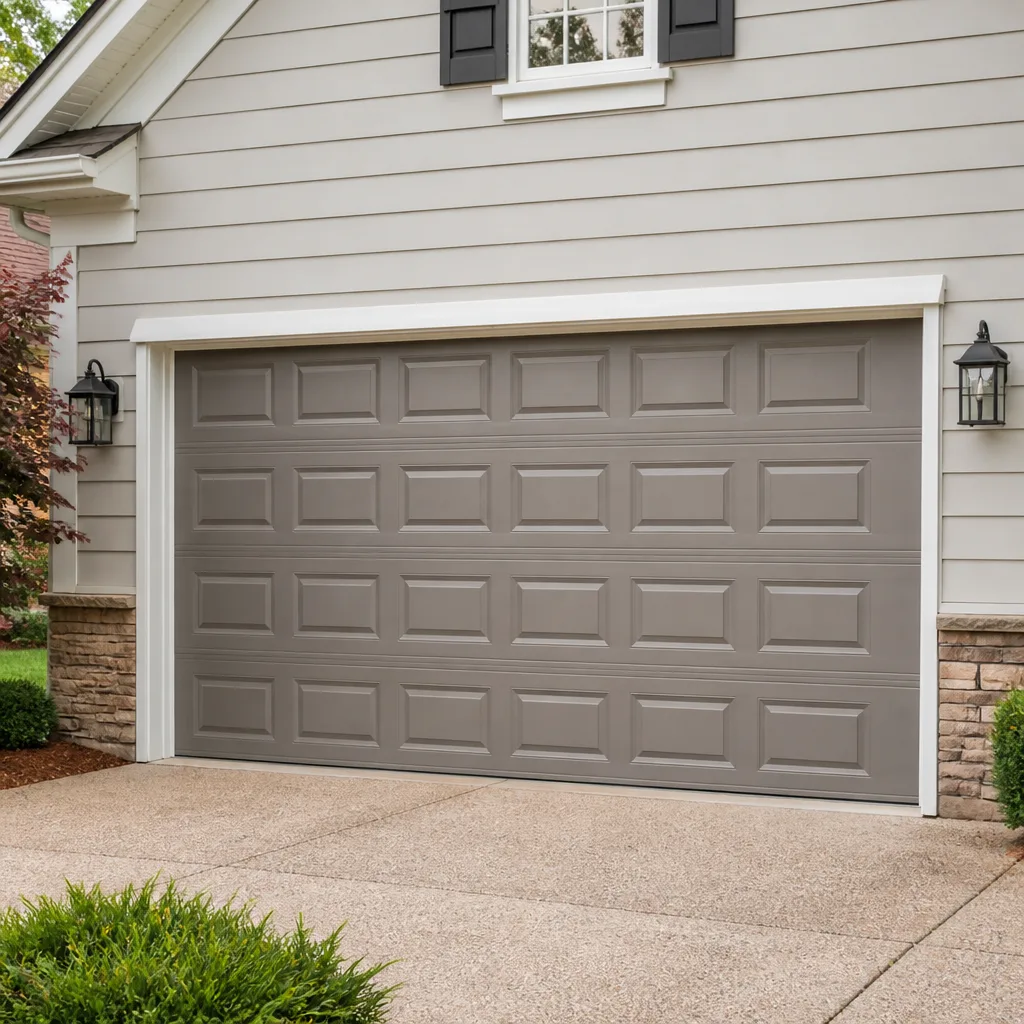 Raised-panel steel
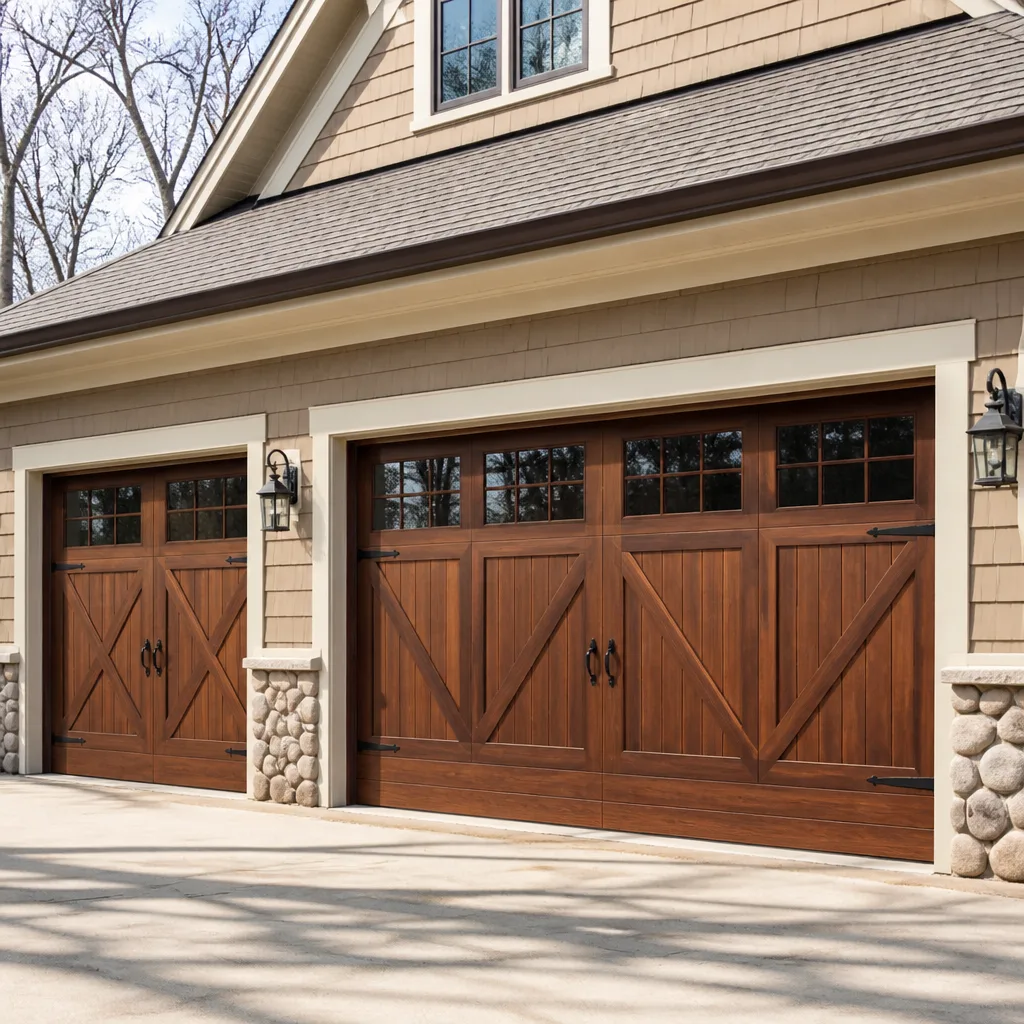 Carriage house
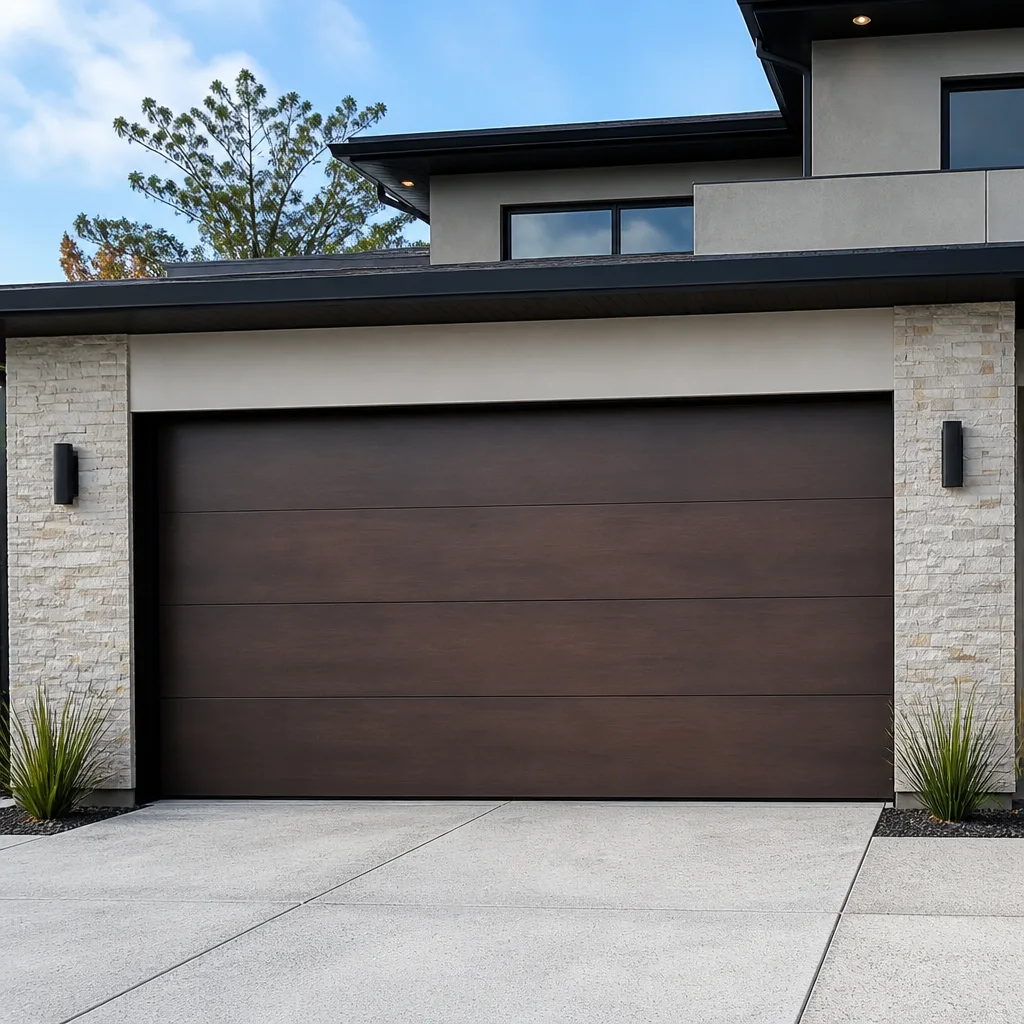 Modern flush
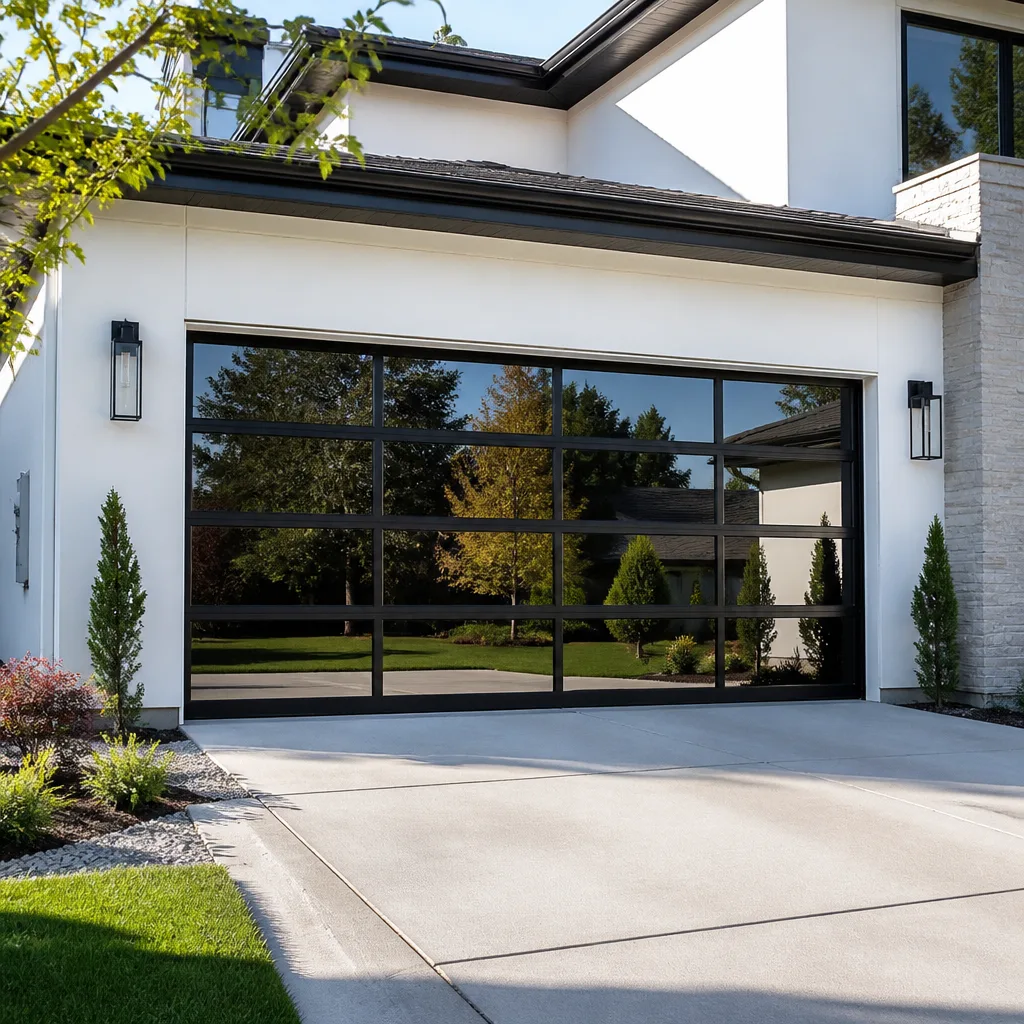 Full-view glass
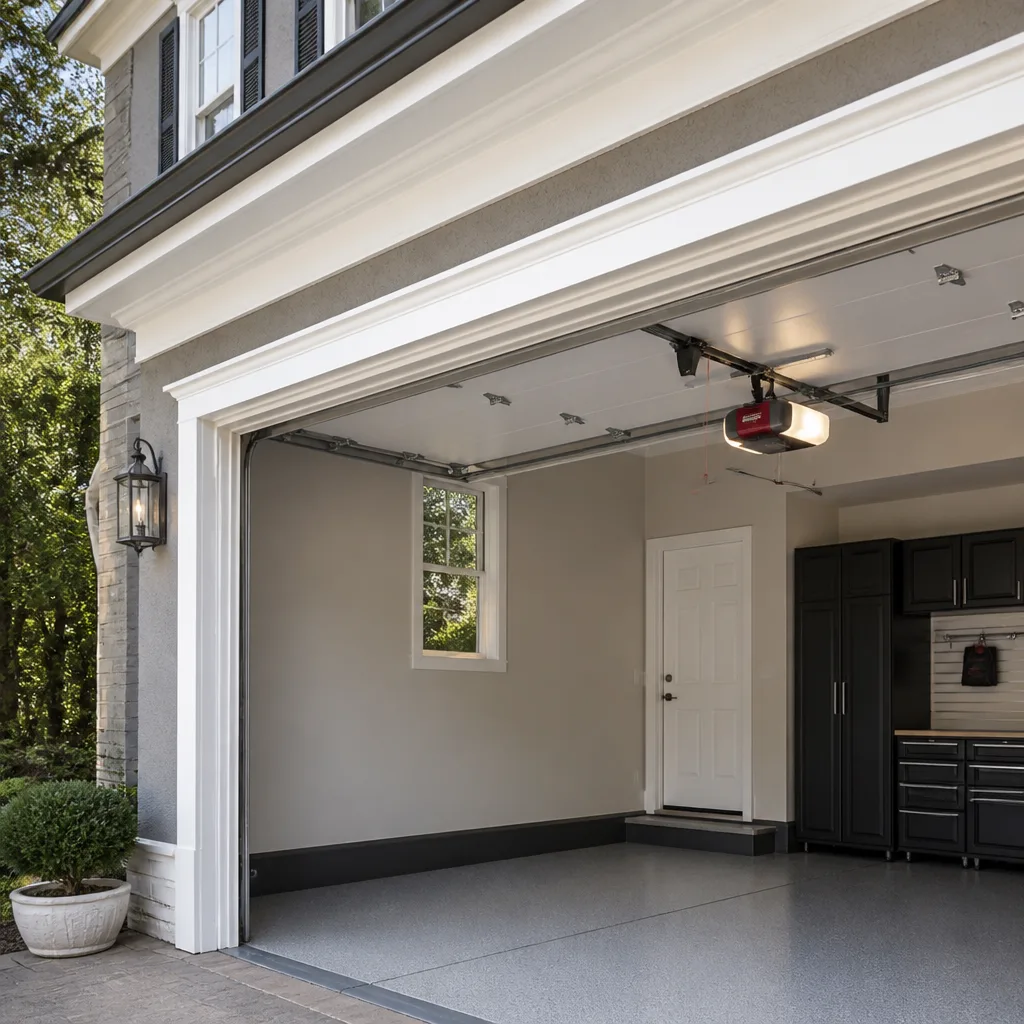 LiftMaster openers
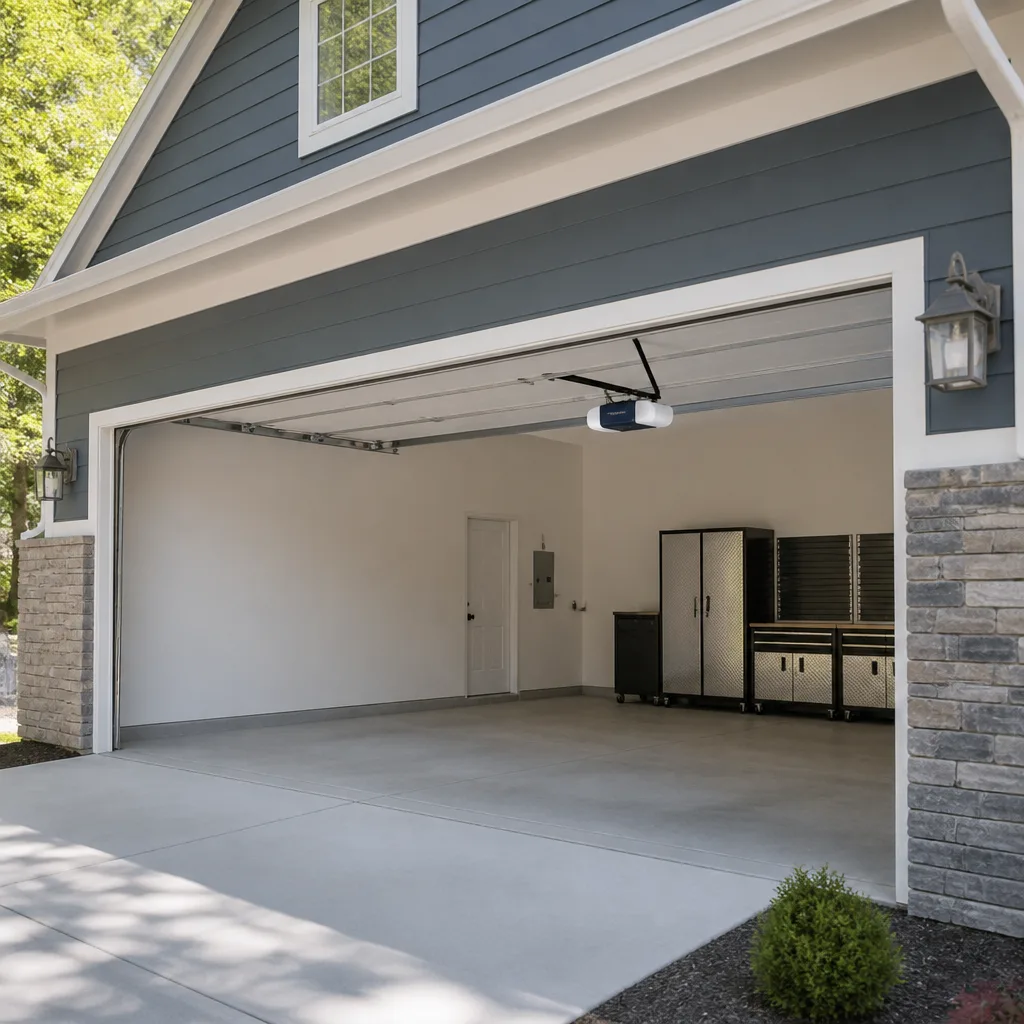 Chamberlain openers
Full 25-point door and opener safety check with every visit - springs, cables, rollers, tracks, and your LiftMaster or Chamberlain opener included
You get a price before we start. It does not change when the pro arrives.
Get your free estimateChoosing the Right Garage Door Brand: A Buyer’s Guide for Brick Township
The brand a big-box installer recommends is often the brand already sitting on the installer’s truck, not the one best suited to a salt-air environment two miles from Barnegat Bay. That’s the first thing worth understanding before you spend a dollar on a new door in Brick Township. Manufacturer literature won’t tell you which brands hold up to shore-adjacent humidity, which ones leave you waiting on a factory order when a spring lets go, or which opener systems trap you with a single source for parts. This guide covers all three. We’ll walk through construction types and what they mean here, a directional comparison of the brands you’ll actually see on Ocean County homes, the parts-availability reality that decides how long any repair takes, and how to avoid the weight-to-opener mismatch that shortens motor life.
Quick Answer
For a Brick Township home, the right garage door brand is the one with local parts distribution, construction suited to a humid shore-adjacent climate, and serviceable components that don’t lock you into a proprietary opener. Clopay, Amarr, and CHI are widely stocked and serviced across Ocean County; Wayne Dalton doors are sound but some of their opener systems limit your future repair options. Match the door’s weight to your opener’s horsepower before you buy, and never choose a brand purely on showroom looks or an installer’s recommendation alone.
Styles & brands we work with
- Raised-panel steel
- Carriage house
- Modern flush
- Full-view glass
- LiftMaster openers
- Chamberlain openers
Table of Contents
- How to Evaluate a Brand for Shore-Climate Durability
- The Parts Availability Reality Check
- Wayne Dalton vs. Clopay vs. Amarr vs. CHI in Ocean County
- Why Opener Brand Independence Matters
- Matching Door Weight to Your Opener’s Horsepower
- Six Questions to Ask Any Installer or Technician
- Common Mistakes to Avoid
- When to Call a Professional
How to Evaluate a Brand for Shore-Climate Durability
Brick Township sits between the Metedeconk River and Barnegat Bay, and that geography shapes what fails first on a garage door. Humidity is the slow force at work: it attacks steel and fasteners, encourages mold around the bottom seal, and stresses painted finishes. A garage is an unconditioned space, so the door panel sees every swing in temperature and vapor. When you’re comparing brands, the question isn’t which door looks best in a brochure. It’s which construction holds up to damp air and repeated wet-dry cycles for the life of the door.
Three construction families cover almost every residential door sold in Brick Township, and each behaves differently in a humid climate.
- Galvanized steel is the workhorse. The zinc coating is applied to the raw steel before any paint, so it sacrifices itself to protect the metal underneath, even where the finish gets nicked. It’s the most forgiving choice for a damp shore-adjacent climate, which is why you’ll find it on many doors across Ocean County.
- Powder-coated steel or aluminum gives a harder, more uniform finish that resists scratching and looks clean for years. The catch is that once a powder coat chips, the exposed metal underneath gets no sacrificial protection, so touch-up matters more than most homeowners realize.
- Aluminum won’t rust, which makes it the obvious pick for anyone who watches bare steel on a humid day with suspicion. It dents more easily than steel and is lighter, which is usually a plus for the opener and a consideration for wind pressure.
We’ve opened up doors across Brick Township that looked fine until a hinge or bottom bracket had quietly rusted through. That’s the failure mode climate comparison guides skip. Material is only half the story. Look at the hardware too: hinges, rollers, tracks, and springs all see the same damp air as the panels, and a brand that pairs good panels with cheap fasteners will still give you trouble. When you ask about a brand, ask what materials go into the moving parts, not just the door face. The panel is what you see. The hardware is what stops working.
One more climate-specific point: a garage door on a bay-adjacent property faces more wind-driven rain than one tucked further inland. Look for brands that publish a wind-load rating with the door’s model, because that number tells you how the panel handles pressure, not just appearance. It’s the kind of specification you can compare across brands, and it matters more here than shiny finishes.
The Parts Availability Reality Check
Parts availability decides how long any repair takes, and it’s the factor most buyers ignore until the first breakdown. Here’s the reality in this market: a handful of brands have distributors and stocking dealers within driving distance of Brick Township, which means common components – rollers, hinges, springs, cables, opener gears – can be sourced and installed without a wait. Other brands move more slowly or route every part through factory ordering, which can add days to a repair that should be routine.
Before you settle on a brand, run through this check in order:
- Ask where the parts come from. Any honest dealer or technician can tell you whether a brand’s common replacement parts are stocked locally or factory-ordered. If they can’t answer, that’s your answer.
- Look at what you already have. If your door and opener are still working, the brand you own today is the one your next repair will draw on. A brand with strong local stock keeps you out of a holding pattern.
- Consider the components most likely to fail. Springs, cables, rollers, and opener components wear first. A brand that stocks all four nearby is worth more to you than a brand with a nicer finish and no local support.
- Weigh the cost of a wait. A garage door that won’t close isn’t just inconvenient. It’s an open door on your home until the part arrives. Fast parts access is a security factor as much as a convenience one.
- Check the whole system, not just the door. The opener matters as much as the panel. Opener parts availability for the brand on your ceiling is worth checking before you commit to a new door brand that may or may not pair well with it.
We work on whatever brand a homeowner already has, and our ground-level view across Brick Township is that the door brands sitting on local shelves are the same ones that get repaired quickly. That’s not a knock on well-made doors that are simply less distributed here. It’s a reminder that a garage door is a mechanical system with parts that wear, so plan for the repair before you need it. If you’re already dealing with a failure, our garage door repair team can tell you what’s involved for your specific brand.
Wayne Dalton vs. Clopay vs. Amarr vs. CHI in Ocean County
Four brands come up constantly on Ocean County homes, and the honest comparison isn’t about which one is best in the abstract. It’s about serviceability: how easy each is to repair, how well its parts are supported locally, and whether its components leave you options later. Here’s how they stack up from a technician’s side.
Clopay is one of the most widely installed brands in the region and, in our experience, among the easiest to service. Panels, springs, and hardware are all well-supported through local distribution, so repairs rarely stall on a part. It’s the brand we most often recommend when a homeowner wants a new door with predictable long-term serviceability. If you’re leaning toward Clopay, we can handle the full garage door installation from measure to final adjustment.
Amarr competes directly with Clopay on build quality and is nearly as easy to service here. Its panels are solid, its hardware is straightforward, and replacement parts are reasonably available. For a Brick Township homeowner who wants a well-built door without much risk of a parts delay, Amarr and Clopay are often the two we weigh side by side.
Wayne Dalton makes sound doors, but some of its systems use proprietary components, especially in the opener and spring department. The Torquemaster torsion system, for example, is a Wayne Dalton-specific design. It works, but it narrows the pool of technicians who can service it and can push you toward Wayne Dalton parts when a repair is needed. That’s a real trade-off worth knowing before you buy.
CHI has a smaller local footprint than the other three but builds quality steel doors, particularly in heavier and insulated models. Parts availability is the weak spot. It’s not a reason to avoid CHI entirely, but it’s a reason to ask your installer how a repair would be handled before you commit.
None of these four is a bad door. The differences are about how much flexibility you keep after the sale.
Why Opener Brand Independence Matters
A garage door and its opener are a system, and some brands quietly tie the two together. When a door brand uses a proprietary opener design – Wayne Dalton’s Torquemaster system being the clearest example in this market – you’re effectively committing to that brand for every opener repair and replacement down the road. A proprietary system isn’t broken by design. It simply limits your technician options, and fewer options usually means longer waits and less price competition when something fails.
The smarter approach is to keep the opener brand independent from the door brand. An opener from a widely supported manufacturer like LiftMaster or Chamberlain fits almost any door and keeps your repair options open. Both brands are built around the myQ smart-home ecosystem, so a connected-home setup works fine without locking you to a particular door brand. If your opener is the part that’s giving you trouble, our garage door opener repair covers both platforms.
What to look for when you’re pairing a new door with an opener:
- Open architecture. The opener’s rail, brackets, and arm should be standard dimensions so any qualified technician can fit a replacement without bespoke parts.
- Smart-home compatibility. LiftMaster and Chamberlain cover the majority of residential openers in use today, and both connect to the myQ app ecosystem. If you want to control the door from your phone, that’s the lane to stay in.
- Common replacement parts. Gears, logic boards, and safety sensors for these openers are widely stocked. A proprietary opener’s failed logic board can leave you waiting on a factory shipment.
We’ve seen the opposite too: a door brand that’s perfectly standard paired with a proprietary opener. That combination is worth avoiding just as much as the reverse. The door brand doesn’t have to be the opener brand, and in most cases it shouldn’t be.
Matching Door Weight to Your Opener’s Horsepower
This is the mismatch that kills motors in year two, and it’s almost invisible at the time of sale. A garage door is heavy – the panels, the framing, the glass, the insulation all add up – and the opener has a horsepower rating that assumes a certain load. Installers who don’t weigh the door or check the existing opener’s rating are setting you up for a short-lived motor, and the failure comes months or years later when the warranty conversation is harder.
Before you buy a door, work through this check in the right order:
- Have the door’s weight quoted. A good dealer can give you the weight of the panel and hardware as specified. Don’t guess, and don’t accept “it’s about the same as the old one” without a number.
- Read the opener’s horsepower rating. Most residential openers run at 1/2 or 3/4 horsepower. Check the label on the unit or the manual before you assume it’ll handle the new door.
- Compare the two. If the new door is meaningfully heavier – insulated panels, double-layer construction, glass sections all add weight – the existing opener may be undersized. A mismatch shows up as a slow, straining door or a motor that struggles on the first cold morning.
- Factor in the springs. The right springs are what actually counterbalance the door’s weight. An opener lifts a counterbalanced door; it doesn’t lift the door’s full weight. If the springs are matched to the new door, the opener load drops. If they aren’t, the motor carries more than it should. Spring tuning is precise work, and our garage door spring repair handles that calibration.
- Replace the opener if it’s undersized. It’s better to know that before the door goes up than after the motor dies. A cheap fix early is a cheaper repair than a new motor and a second service call later.
We work on equipment from LiftMaster, Chamberlain, Genie, Clopay, Amarr, Wayne Dalton, Craftsman, and Raynor, and the weight-versus-horsepower check applies to every one of them. The brands don’t vary much on this point. The installation judgment does.
Six Questions to Ask Any Installer or Technician
The questions you ask before you buy a door say more about the outcome than the brand name on the panel. Here’s what to put to any installer or technician in Brick Township, and why each one matters.
- What’s the door’s weight, and will my current opener handle it? This should be answered with numbers, not reassurances. If they can’t tell you the weight and the opener’s horsepower, walk away.
- Where do you source parts for this brand? You want to hear about local distribution, not a factory order. A technician who works with your brand regularly already knows where the parts come from.
- What’s the wind-load rating on this model? For a bay-adjacent property in Brick Township, wind pressure is a real load. The rating should be in the manufacturer’s documentation, not a guess.
- Does this brand use proprietary openers or springs? Ask directly. A proprietary Torquemaster-style system isn’t a dealbreaker, but you should know what it means for future repairs before you commit.
- What’s the spring setup, and how is it sized to the door? The answer should mention cycle life and how the springs are matched to the door’s weight. Springs are a safety-critical component, and a vague answer is a red flag.
- Can you service this brand on the spot, or does a repair need a factory order? If the answer is a factory order, ask how long that typically takes. It’s better to know now than on the first failure.
Any specialist who works on multiple brands will answer all of these without hesitation. That’s true whether you’re comparing a Craftsman opener to a LiftMaster unit or deciding between a Clopay and a CHI door. The right questions sort out the brand and the installer at the same time.
Common Mistakes to Avoid
- Choosing the brand the installer happens to stock. The door on the truck is convenient for the installer, not necessarily right for your home. Compare at least three brands on parts availability and construction before deciding.
- Ignoring the hardware behind the panel. A door that looks well-made can hide cheap hinges, rollers, and fasteners that rust first in Brick Township’s humid air. Ask what goes into the moving parts.
- Buying a door that locks you into a proprietary opener. A brand like Wayne Dalton’s Torquemaster system narrows your future repair options. Ask whether the door requires a matched opener before you buy.
- Assuming your old opener can handle a heavier door. Insulated and glass panels add weight. Measure and compare against the opener’s horsepower before the door goes up, not after the motor fails.
- Picking a brand with no local parts distribution. A parts order that takes days is a longer wait when the door won’t close. Confirm where parts are stocked before you commit.
- Skipping the wind-load rating on a bay-adjacent property. Inland homes can often skip this. A Brick Township home near the water can’t afford to.
- Letting a generalist work on a proprietary system. Springs and openers on specialized brands need a technician who knows that system. A general handyman improvising on a proprietary spring is a safety risk, not a shortcut.
When to Call a Professional
Some decisions are safe to make alone. Brand selection for a door that’s already failing, or a spring that’s snapped, is not one of them. Call a professional when the door won’t close all the way, when a spring is broken or visibly stretched, when the opener strains or reverses on its own, when cables are loose, or when you’re comparing two or three doors and can’t decide which construction and opener pairing fits your home. A trained technician will weigh the door, check the opener’s horsepower, confirm parts availability, and match spring size to the new load before installing. Those are the checks that keep a door serviceable for years.
Garage Door Repair Brick offers free estimates in Brick Township. Our technicians have up to 12 years of experience, and we work on whatever brand you have. Call (888) 569-3530. We answer 24/7. Fast dispatch from 7am to 7pm, Sunday through Friday. The price is quoted and agreed before any work starts.
See the difference
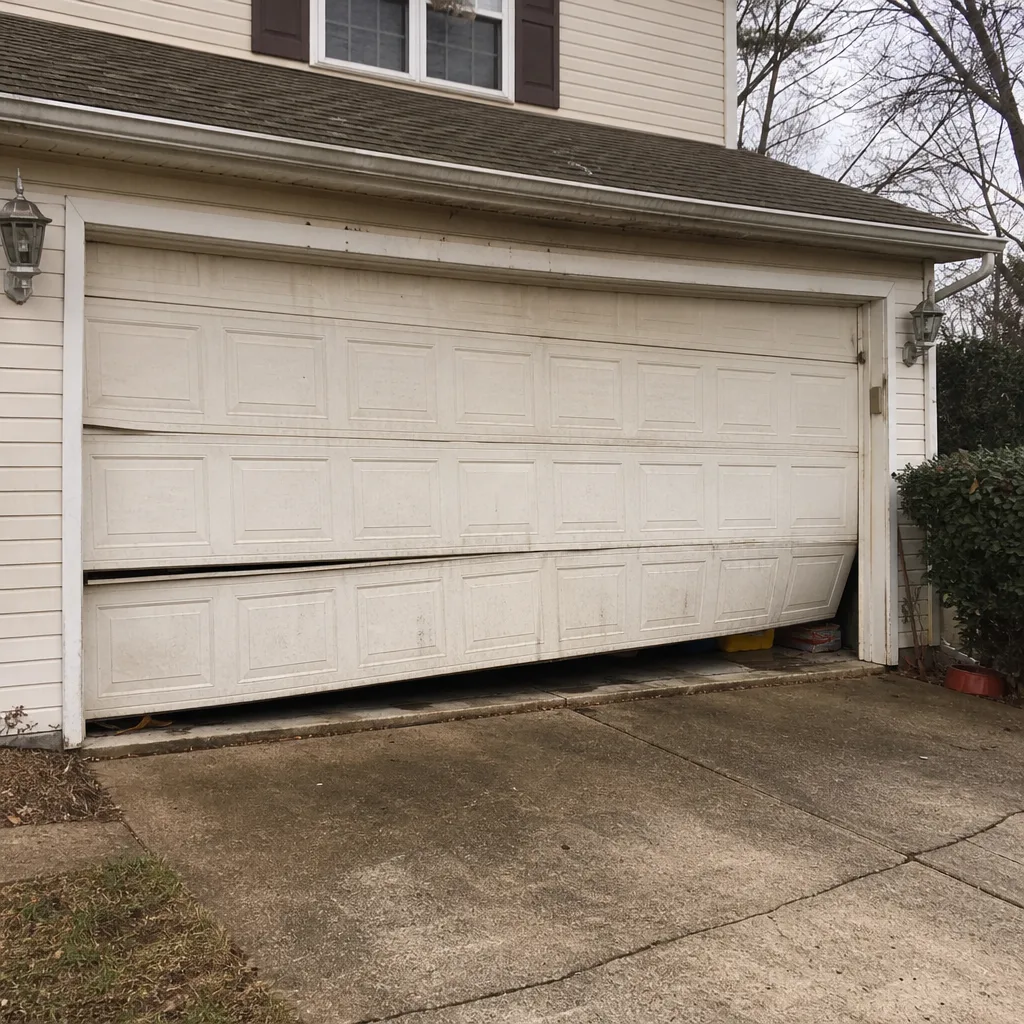 Before
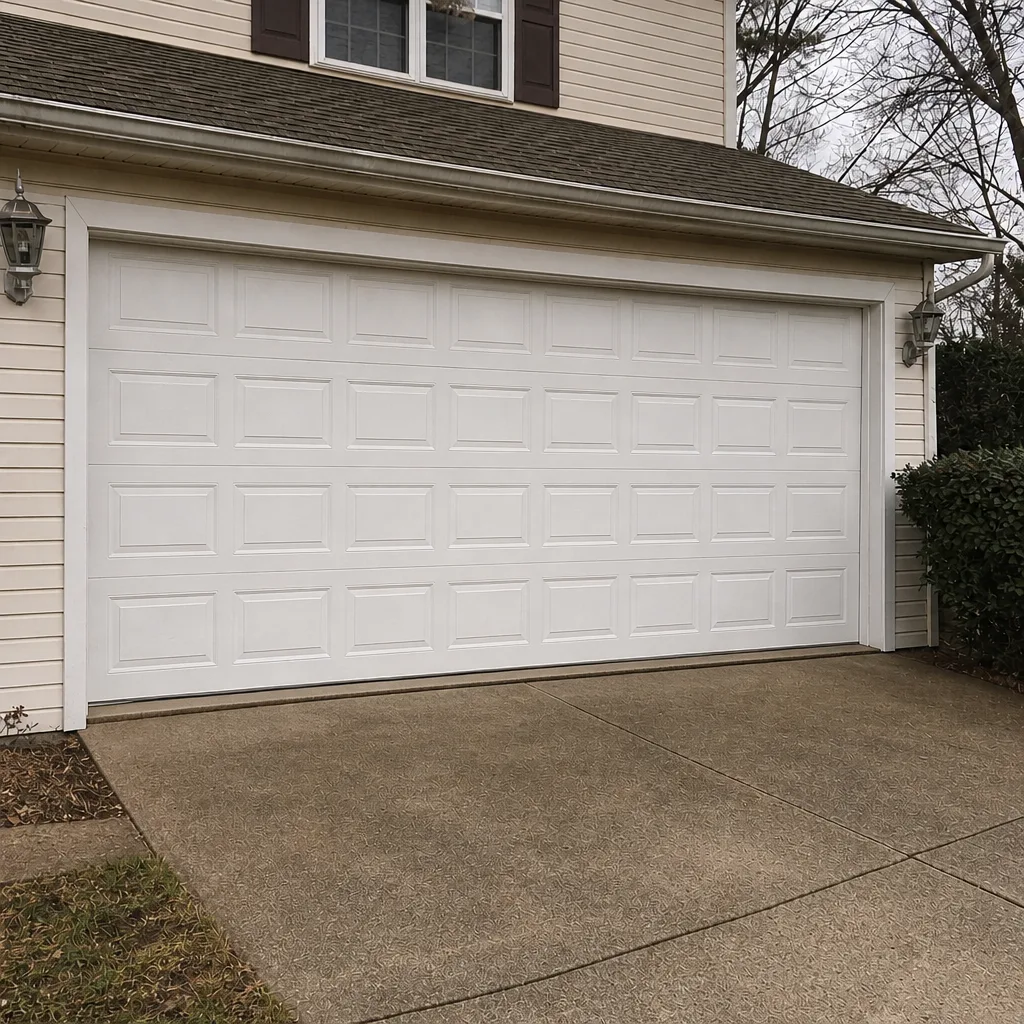 After
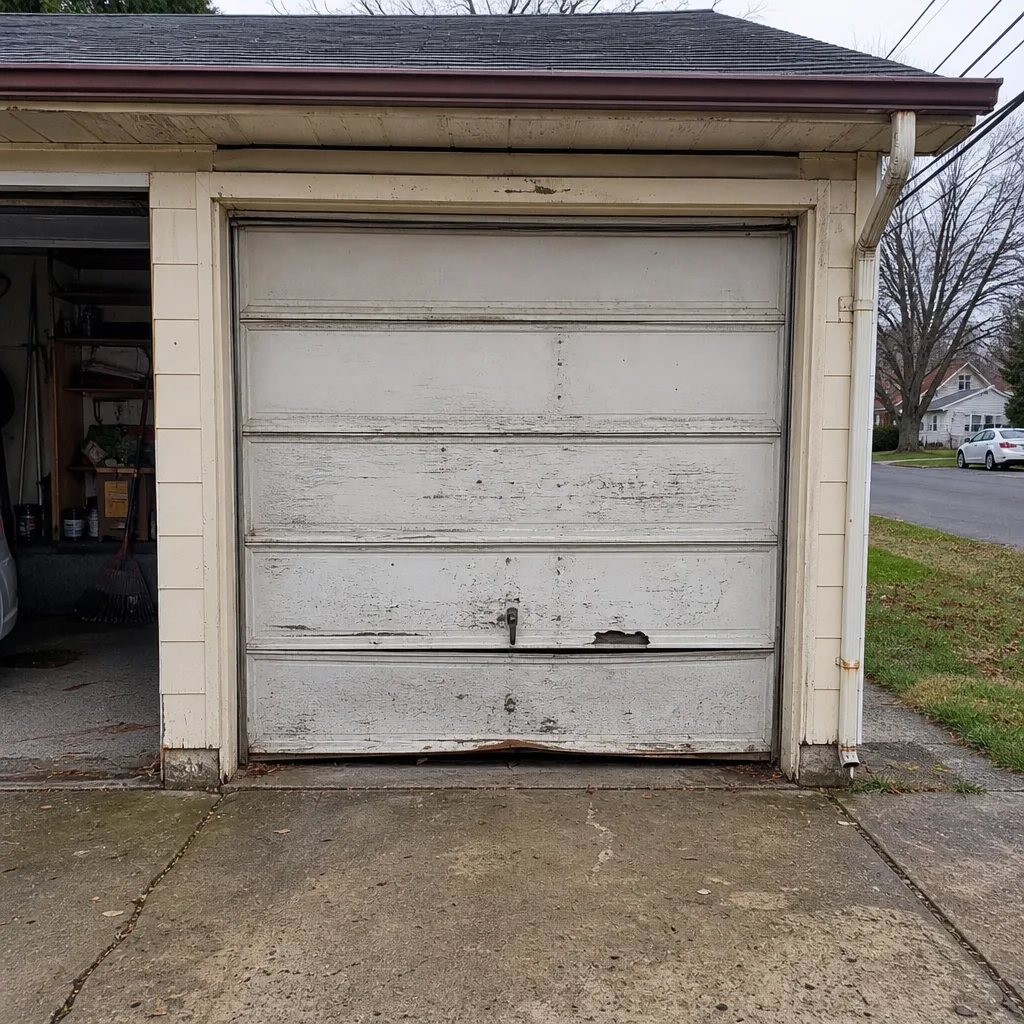 Before
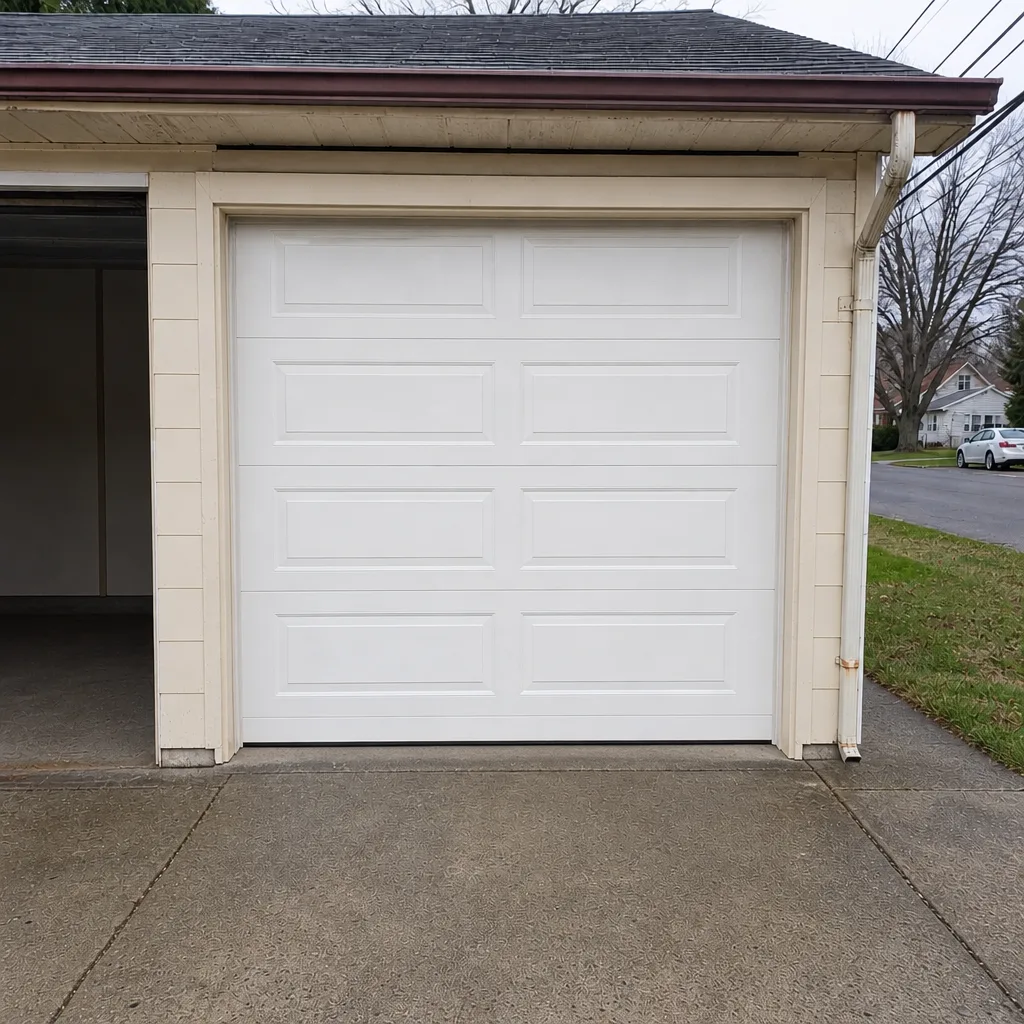 After
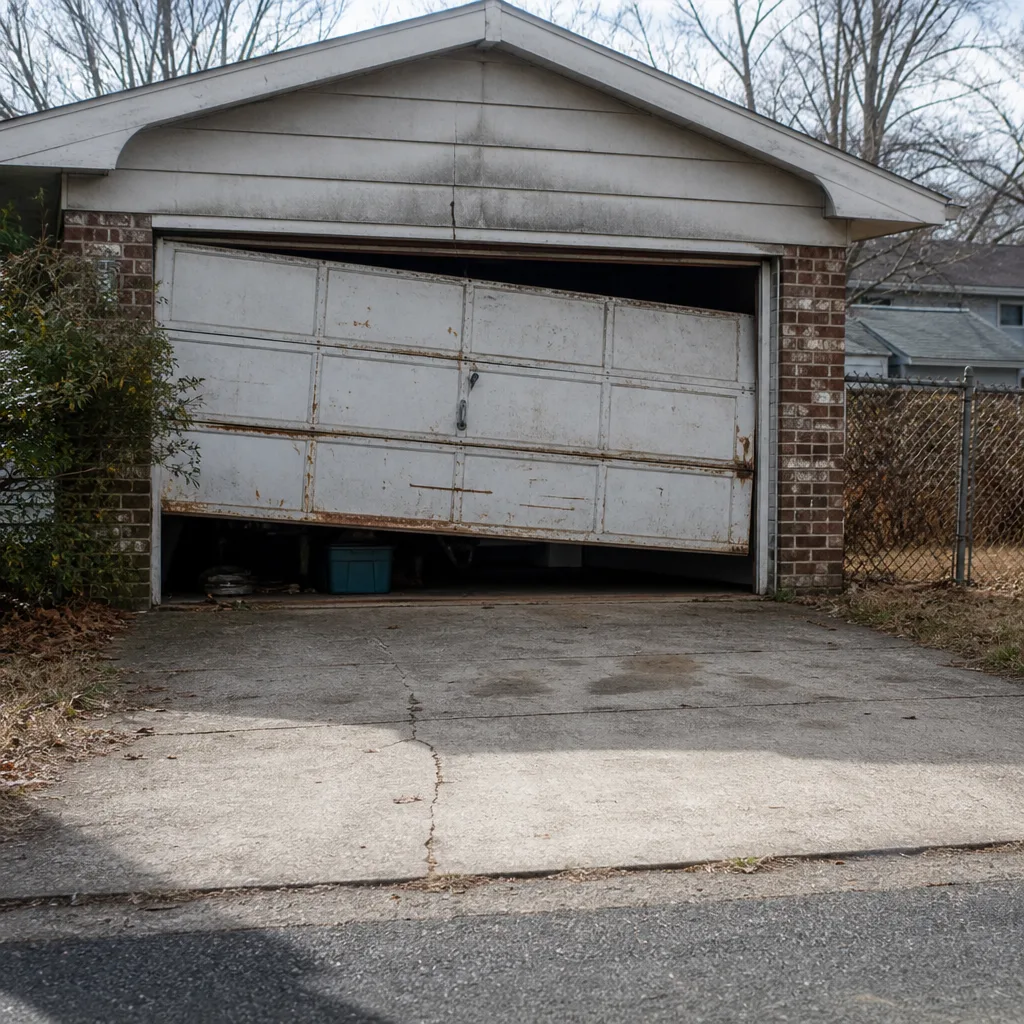 Before
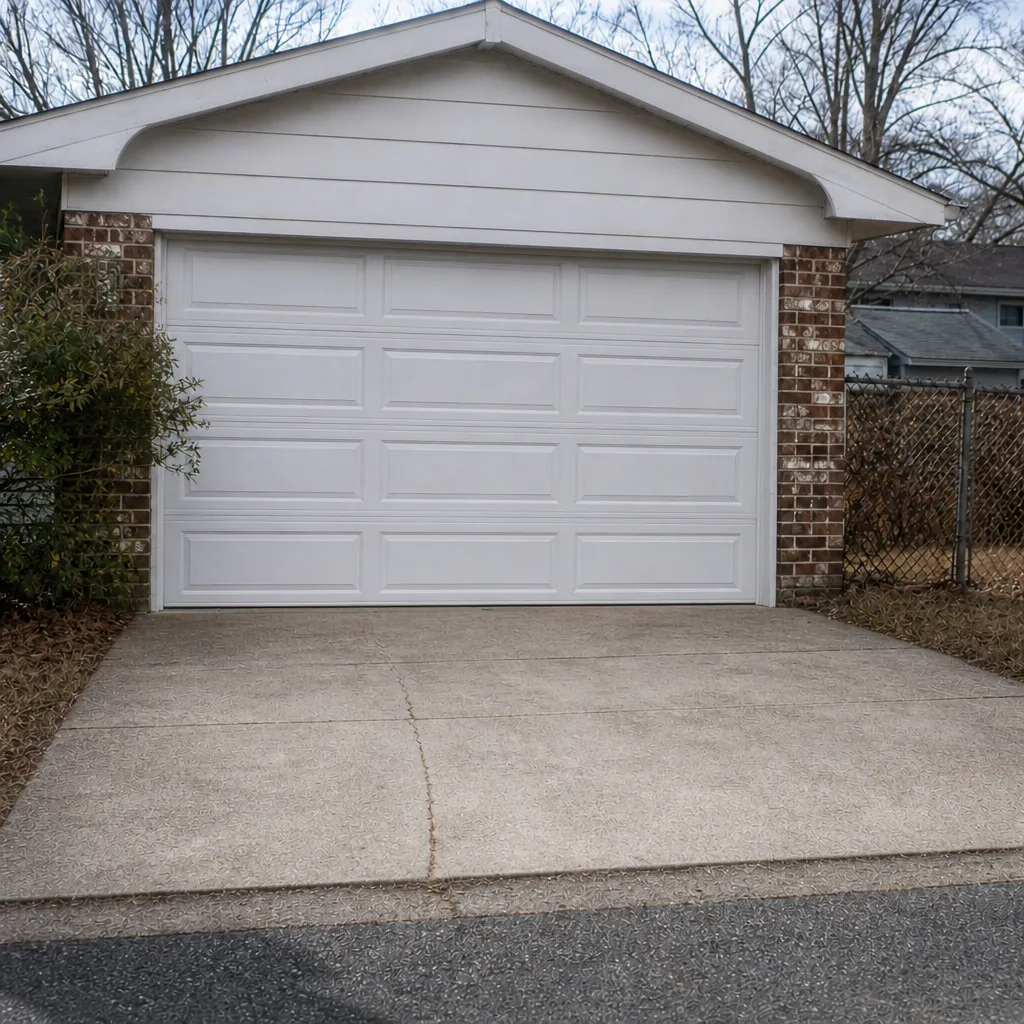 After
Frequently Asked Questions
Clopay, Amarr, and CHI are the strongest choices for a Brick Township home when you weigh parts availability, shore-climate durability, and serviceability together. Clopay and Amarr hold up best on local parts support, while CHI builds quality steel doors but has a smaller local footprint. For a bay-adjacent property, wind-load ratings and hardware materials matter more than the finish. Call (888) 569-3530 for a free estimate on your home.
They can be harder than Clopay or Amarr because some Wayne Dalton systems use proprietary components, including the Torquemaster torsion system. The door is sound, but the proprietary design narrows the pool of technicians who can service it cleanly. If you already own a Wayne Dalton, ask a specialist before you book a repair, and confirm they work on that system. Call (888) 569-3530 to ask about your specific model.
Not necessarily, but you need to check the weight against the opener’s horsepower before installing. Insulated panels and glass sections add weight, and a heavier door on an undersized opener will strain the motor. A 1/2 or 3/4 horsepower opener can usually handle a standard single door, but a heavier double door often needs more. Have the door weighed and the opener rated before you buy. Call (888) 569-3530 for a free measure and estimate.
We work on LiftMaster, Chamberlain, Genie, Clopay, Amarr, Wayne Dalton, Craftsman, and Raynor equipment. That covers the brands you’ll most often see on Brick Township homes. Parts availability and proprietary systems vary by brand, so it’s worth asking about your specific door and opener when you call. Call (888) 569-3530 for a free estimate.
Yes, especially for a bay-adjacent property in Brick Township. Wind-load rating tells you how a panel handles pressure, which is a real consideration near the water and less so further inland. Look for the rating in the manufacturer’s model documentation, and ask your installer to confirm it before committing. Call (888) 569-3530 with your model in mind and we’ll talk through it.
Yes, in almost every case. Clopay doors use standard architecture, and LiftMaster openers fit standard rails and brackets, so the two pair without a proprietary lock-in. The one thing to check is weight versus horsepower. Confirm the new door’s weight against the opener’s rating before the install, and you’ve covered the main risk. Call (888) 569-3530 for a free estimate.
The Bottom Line
The best garage door brand for a Brick Township home is the one with local parts support, construction suited to a humid shore-adjacent climate, and serviceable components that don’t limit your repair options. Compare Clopay, Amarr, and CHI on the strength of their hardware and wind-load ratings, not on how they look in a showroom. Ask about proprietary systems before you buy, keep the opener brand independent and matched to the door’s weight, and choose a technician who works on whatever brand you own. Do those five things and the door lasts, the repairs come quickly, and the next decision gets easier. Call (888) 569-3530 for a free estimate in Brick Township. We answer 24/7. Fast dispatch from 7am to 7pm, Sunday through Friday.
Written by the team at Garage Door Repair Brick.